Think of two women, both forty-four. One describes herself as tired before the day even starts — quick to snap, slow to recover, carrying every small friction for hours after it's over. The other seems, for lack of a more precise word, light. Not naive, not avoidant of hard things — she handles conflict, disappointment, and bad news with a kind of steadiness. And she also seems, somehow, younger than her calendar age. More curious. Quicker to laugh at herself.
The easy story is that these are two different personality types — one serious and grounded, one playful and free. I went looking for the actual psychology, expecting to find that story confirmed. Instead I found research suggesting these two women might be running on the exact same trait, just described from two different angles.
Emotional maturity and feeling young at heart aren't opposing traits — they appear to share a root: how steadily your nervous system handles stress. People who regulate their emotions well tend to both show the outward signs of emotional maturity and report a younger subjective age, while chronic emotional reactivity is linked to feeling — and in some measures, aging — older than the calendar says.
The Research That Connects Them
"Subjective age" — how old you feel, independent of how old you are — has been studied for decades, and one of the more consistent findings involves personality. Researchers led by Yannick Stephan have repeatedly found that people high in neuroticism — the trait cluster covering emotional reactivity, anxiety, and difficulty recovering from stress — tend to report feeling older than their actual age. People higher in openness and conscientiousness, meanwhile, tend to report feeling younger.
Neuroticism isn't the clinical opposite of emotional maturity, but the overlap is significant. A hallmark of emotional maturity is exactly what low neuroticism describes: not reacting to every provocation, recovering from setbacks without spiraling, tolerating discomfort without needing to immediately discharge it onto someone else. The trait that makes someone "easy to be around" in a crisis is, statistically, the same trait that predicts they'll report feeling younger than their age.
The quality that makes you steady under pressure and the quality that makes you feel young may not be two separate strengths. They may be the same one, seen from two different rooms.
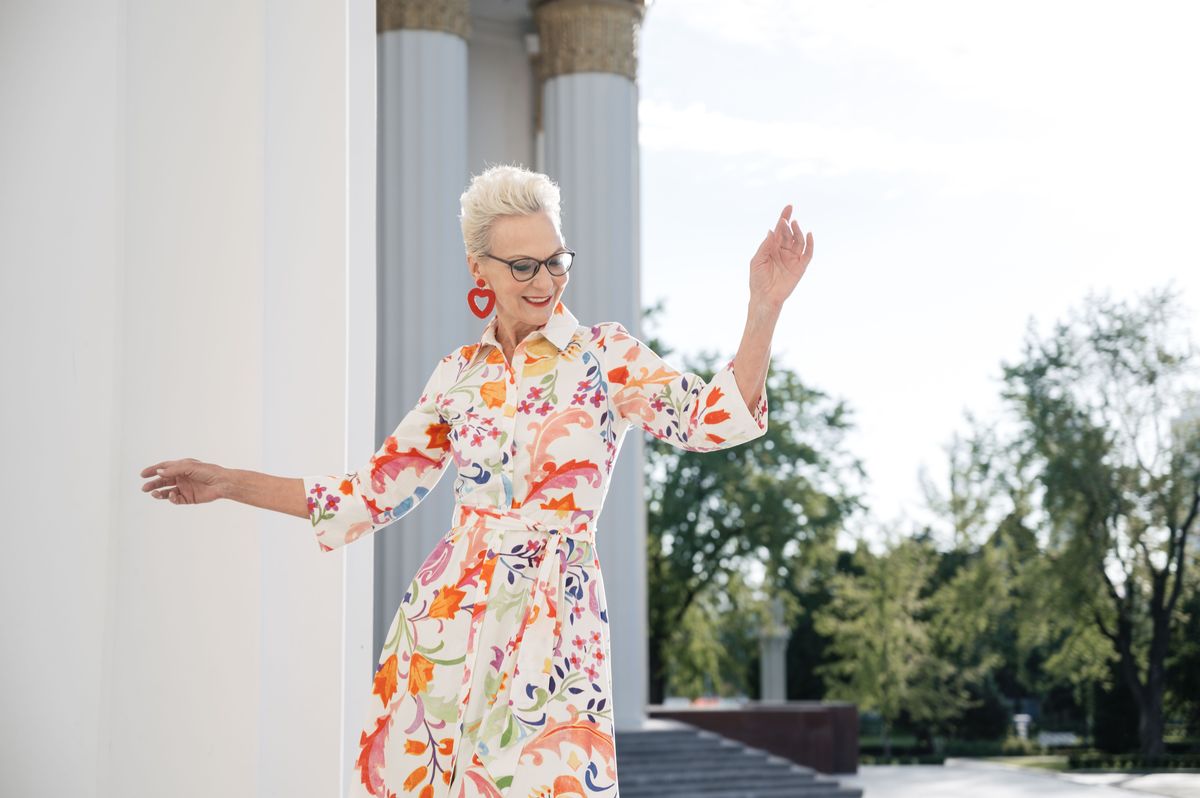
Why Reactivity Ages You From the Inside
The mechanism isn't mysterious once you follow it. Chronic emotional reactivity keeps the body's stress response — cortisol and the rest of the HPA axis — activated more often than it needs to be. That wear shows up physically: in skin, sleep, and the markers covered in the research on subjective age and cortisol. It also shows up psychologically. Someone who is regularly flooded by their own reactions has less bandwidth left over for curiosity, playfulness, or the mental flexibility that reads as youthful — because that bandwidth is being spent on recovery.
Someone with steadier regulation isn't necessarily facing less stress. They're spending less of themselves metabolizing it. That difference compounds, quietly, over years.
- Slower recovery after ordinary friction or conflict
- Less bandwidth left for curiosity or play
- Chronic low-grade stress activation, even at rest
- A subjective sense of being older, heavier, more depleted
- Faster return to baseline after something hard
- Spare capacity for lightness and genuine interest
- Lower chronic physiological wear over time
- A subjective sense of feeling steadier — and younger
The Part Everyone Gets Backwards
Here's where most people's intuition breaks: they assume emotional maturity means becoming more rigid, more serious, less willing to be silly or wrong in public. The developmental research says close to the opposite.
Psychologists studying adult cognitive development — building on work by researchers like Michael Basseches on what's sometimes called "post-formal" or dialectical thinking — describe mature adult thought as becoming more tolerant of contradiction and ambiguity, not less. A rigid, black-and-white certainty about how things should be is more often a sign of arrested development than of maturity. The genuinely mature response to a messy, contradictory situation is curiosity about it, not a demand that it resolve neatly. That's a very close cousin of the "still curious, still playful" quality people associate with feeling young at heart.
There's a second piece from Laura Carstensen's socioemotional selectivity theory, originally developed to explain a strange finding in aging research: older adults, despite having "less time left," often report equal or higher emotional well-being than younger adults. Carstensen's explanation is that awareness of finite time — which can arrive through age, but also through hard-won maturity — makes people better at regulating emotion and ruthlessly prioritizing what actually matters to them. Less energy spent on grudges and status competitions. More spent on people and moments they actually care about. That reprioritization is part of why so many emotionally mature people seem lighter rather than heavier — they've simply stopped carrying what doesn't matter.
Feeling young at heart was never about refusing to grow up. In the research, it looks a lot like what happens once you actually finish growing up.

What Actually Builds This
- Practice the pause, not the performance. The regulation piece isn't about suppressing reactions — it's about widening the gap between a trigger and your response, even by a few seconds.
- Let contradictions sit unresolved sometimes. Tolerating "this is complicated and I don't need to fully solve it right now" is a marker of the flexible thinking linked to both maturity and youthfulness.
- Prioritize like time is finite — because it is. Carstensen's research suggests consciously narrowing your attention to people and things that actually matter improves well-being at any age, not just late in life.
- Recover deliberately after friction. Chronic reactivity is partly about how long you stay activated after a stressor ends. Whatever helps you actually downshift — movement, a real conversation, time outside — is doing more than it looks like.
- Stay curious about being wrong. Defensiveness is expensive, physiologically and socially. Curiosity about your own mistakes is cheaper and, per the research above, more youthful.
This is correlational research describing a tendency, not a verdict on your character or a reason to blame yourself for feeling worn out. Chronic stress from real circumstances — grief, illness, caregiving, financial strain, an unsafe relationship — isn't a personality failure, and no amount of "regulating better" erases stress that is genuinely, structurally too much for one person to carry alone.
If you recognize chronic reactivity in yourself and want support building steadier regulation, a therapist can help far more precisely than an article can. This is worth taking seriously as a real skill to build, not a moral failing to fix alone.
Growing up and feeling young were never opposites. They may be the same quiet skill, practiced long enough to become a personality.
You don't have to choose between being the steady one and being the light one. The research suggests that steadiness, practiced honestly over time, is what makes the lightness possible in the first place.