The relationship between food and hormones is not a wellness trend. It is biochemistry. Your sex hormones — estrogen, progesterone, testosterone — are synthesized from cholesterol. Your stress hormones are regulated in part by the micronutrients you consume or fail to. The cascade of signals your endocrine system depends on to function is influenced, daily and cumulatively, by what you put on your plate. This is not a minor variable. It is, in many ways, the foundational one.
What follows is not a detox protocol or a rigid meal plan. It is a cleaner framework for understanding which foods give your hormonal system something to work with — and which ones, eaten habitually and without awareness, create friction in a system that was already working hard enough.
What Your Hormones Are Actually Made Of
Steroid hormones — which include estrogen, progesterone, cortisol, and testosterone — are all derived from cholesterol. (So, incidentally, is vitamin D, which isn't really a vitamin at all but a secosteroid hormone your skin builds from sunlight.) This is a fact that the low-fat dietary advice of the 1980s and 1990s effectively obscured for an entire generation of women. Without adequate dietary fat, and specifically without the right kinds of fat, the raw material for hormone synthesis is simply not there in sufficient quantity. The consequences range from subclinical — slightly disrupted cycles, mild mood instability, skin that never quite settles — to more pronounced, depending on the degree and duration of the deficit.
This is why the first category of hormone-supporting foods is not a vegetable or a supplement. It is fat — the right kinds, in adequate amounts, eaten consistently. Avocados, walnuts, flaxseeds, chia seeds, and extra virgin olive oil are not dietary indulgences. They are building blocks. The brain, which houses the hypothalamus and pituitary gland — the control center of the entire hormonal cascade — is nearly 60% fat by dry weight. What you eat reaches there, too.
The Foods That Build and Support
Hormone-supportive eating is not about individual superfoods. It is about patterns — food categories that, eaten with some consistency, provide the structural and functional inputs the endocrine system needs to operate without strain.
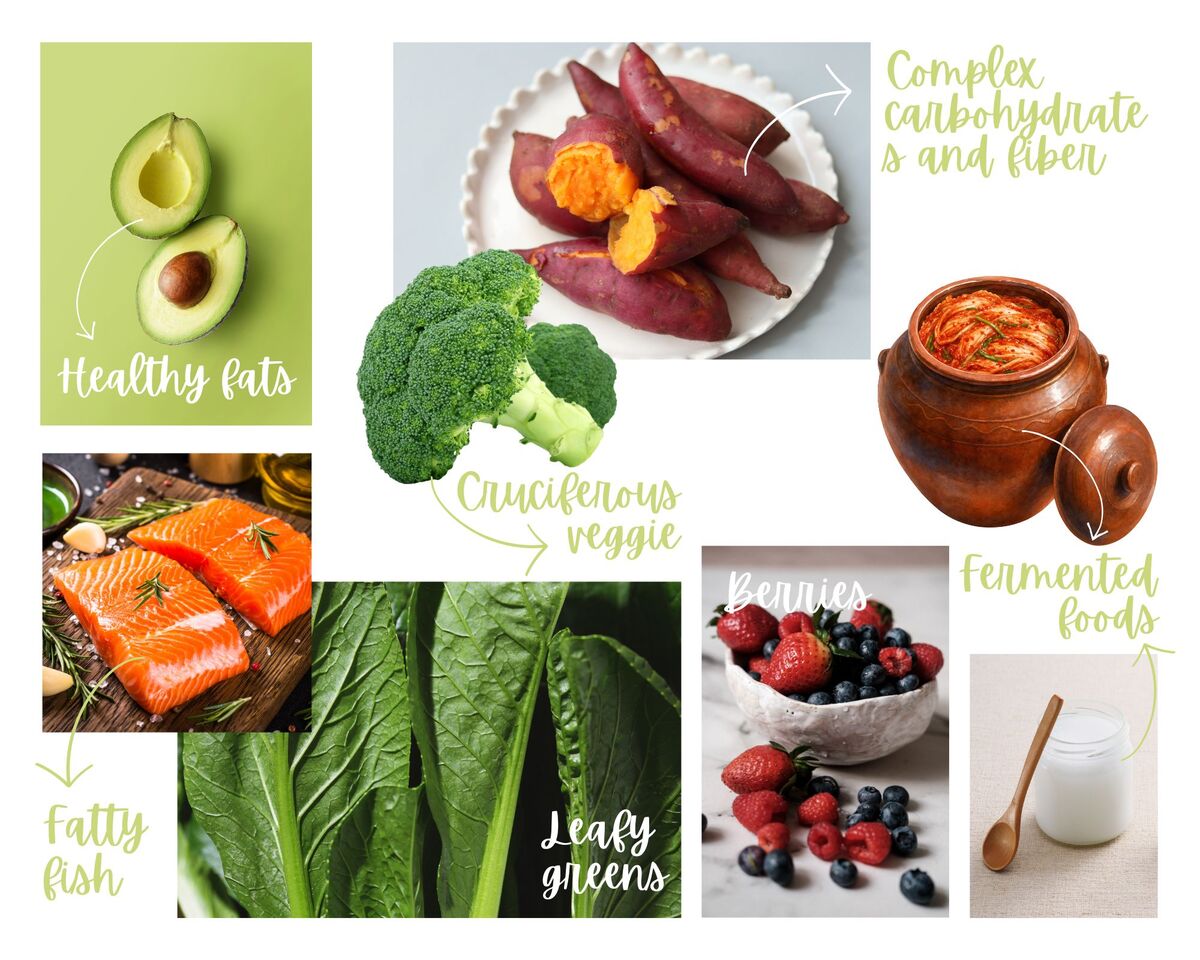
Healthy fats — the hormone precursors. Avocado, walnuts, chia seeds, flaxseed, and coconut oil supply the fatty acid profile the body uses to produce sex hormones. Flaxseed in particular contains lignans — phytoestrogens that can support estrogen balance, particularly relevant in perimenopause when estrogen production begins to fluctuate.
Fatty fish — omega-3s and vitamin D. Salmon, mackerel, sardines, and albacore tuna are among the most nutrient-dense foods available for hormonal health. Omega-3 fatty acids reduce systemic inflammation, improve cellular receptor sensitivity (meaning hormones can actually communicate with their targets), and directly support the brain structures that govern hormonal signaling. Vitamin D, present in fatty fish and increasingly understood as a hormone precursor itself, is deficient in an estimated 40% of adults in the northern hemisphere.
Cruciferous vegetables — estrogen metabolism. Broccoli, kale, cauliflower, Brussels sprouts, and cabbage contain compounds called indole-3-carbinol (I3C) and its metabolite DIM (diindolylmethane), which support the liver's ability to metabolize and clear excess estrogen from the body. For women navigating estrogen dominance — a pattern increasingly common in midlife, often accompanied by heavy periods, mood changes, and breast tenderness — this category of vegetables is genuinely therapeutic, not merely nutritive.
Leafy greens — magnesium for cortisol. Spinach, Swiss chard, and dark kale are among the richest dietary sources of magnesium, a mineral that plays a direct role in regulating the HPA axis — the hypothalamic-pituitary-adrenal system that governs cortisol production. Magnesium deficiency is associated with elevated cortisol, poor sleep quality, heightened anxiety, and PMS. It is also among the most common micronutrient deficiencies in women on standard Western diets, largely because soil depletion has reduced its presence in conventionally grown produce.
Berries — antioxidant protection for glands. Blueberries, raspberries, and strawberries are concentrated sources of polyphenols and antioxidants that protect hormone-producing glands — the adrenals, the thyroid, the ovaries — from oxidative stress. Chronic oxidative stress is now understood as a meaningful driver of hormonal dysfunction, particularly in the context of chronic stress and poor sleep.
Complex carbohydrates and fiber — blood sugar stability. Quinoa, oats, and sweet potatoes are not simply energy sources. They are insulin regulators. The fiber they contain slows glucose absorption, moderates the insulin response, and provides the steady, sustained energy your adrenal glands need to avoid the cortisol spikes that accompany blood sugar crashes. Fiber also plays a critical secondary role: binding to estrogen in the digestive tract and facilitating its excretion rather than reabsorption.
Fermented foods — the gut-hormone axis. Yogurt, kefir, kimchi, and sauerkraut support the estrobolome — the collection of gut bacteria specifically responsible for metabolizing estrogen. A disrupted gut microbiome can impair estrogen clearance, allowing it to be reabsorbed rather than excreted, contributing to the estrogen excess that underlies so many common hormonal complaints. Fermented foods are one of the most direct dietary interventions for this mechanism.
Your hormones are not misbehaving. They are responding — to what you eat, to how you sleep, to the chronic low hum of a life lived without enough recovery. The disruption almost always has a source.
The Foods That Quietly Undermine
The more revealing side of this conversation is not the foods to add — it is the foods that are already present in most women's diets that are quietly working against hormonal balance every day, in ways that are rarely named and almost never visible on a food label.
Refined sugars and high-fructose corn syrup. Found in sodas, packaged snacks, flavored yogurts, and most processed foods marketed as "low fat," refined sugars are the most direct dietary driver of insulin resistance. Chronically elevated insulin signals the ovaries to produce more androgens, suppresses progesterone, and elevates cortisol through the blood sugar rollercoaster it creates. Insulin resistance is not only a metabolic issue — it is a hormonal one, and its dietary origins are overwhelmingly here.
Refined seed and vegetable oils. Soybean oil, corn oil, sunflower oil, and canola oil — the default cooking oils in most packaged and restaurant food — are disproportionately high in omega-6 fatty acids. The problem is not omega-6 per se; it is the ratio. A hormonally healthy diet maintains roughly a 4:1 ratio of omega-6 to omega-3. Standard Western diets often run 20:1 or higher. This imbalance drives chronic systemic inflammation, which disrupts hormonal signaling at every level — from receptor sensitivity to gland function to neurotransmitter production.
Conventional dairy. Conventional dairy — particularly milk from cows not raised on pasture — can contain residual estrogen and progesterone from the animals themselves, as well as from the agricultural practices used in their production. The evidence on whether this materially affects human hormone levels is still contested, but women with estrogen dominance or hormonally-driven acne frequently report meaningful improvement when switching to organic, pasture-raised dairy or reducing dairy intake altogether.
Excessive caffeine. A single morning coffee is unlikely to be a significant hormonal concern for most women. The issue is accumulation — multiple coffees, matcha, energy drinks, and caffeinated supplements consumed throughout the day that chronically activate the adrenal stress response. Elevated cortisol from caffeine overuse competes directly with progesterone (they share a receptor), disrupts sleep (during which critical hormonal repair occurs), and creates a cycle of adrenal fatigue that is remarkably common and remarkably under-discussed.
Alcohol. Alcohol is processed by the liver — the same organ responsible for metabolizing and clearing estrogen. When the liver is occupied with alcohol detoxification, estrogen clearance is deprioritized, and excess estrogen recirculates in the bloodstream. Regular alcohol consumption is consistently associated with elevated estrogen levels in women, increased risk of estrogen-dependent conditions, and disruption of the sleep architecture during which growth hormone and progesterone are predominantly secreted.
Food stored or heated in plastic. BPA (bisphenol A) and its replacements (BPS, BPF) are xenoestrogens — synthetic compounds that mimic estrogen and bind to estrogen receptors in the body. They leach into food particularly readily from plastic containers under heat, from canned food linings, and from plastic water bottles left in warm environments. The dose from any single exposure is small. The cumulative, daily, decades-long exposure is not.
The Cycle Syncing Layer — Eating With Your Hormones
Beyond the foundational foods, there is a more nuanced layer of hormonal nutrition that is finally getting the attention it deserves: the fact that nutritional needs are not static across the month. They shift with the hormonal landscape of each menstrual phase — and eating in a way that acknowledges those shifts can meaningfully reduce the symptoms that most women have been taught to simply tolerate.
During the menstrual phase (days 1–5), estrogen and progesterone are at their lowest, and prostaglandins — the compounds that drive uterine contractions — are elevated. Anti-inflammatory foods are the priority here: fatty fish, turmeric, ginger, dark leafy greens, and iron-rich foods like lentils and grass-fed beef to replenish what is lost through blood. Reducing caffeine during menstruation specifically can notably ease cramping severity.
The follicular phase (days 6–13), with rising estrogen and returning energy, supports a lighter dietary approach — fermented foods, fresh produce, and easily digestible proteins. This is when the body is most metabolically efficient and most receptive to new dietary habits.
Around ovulation (days 14–16), estrogen peaks and antioxidant demand rises to support the oxidative load of the ovulatory process itself. Raw vegetables, seeds (particularly sunflower and sesame), and high-fiber foods to support estrogen clearance are most useful here.
The luteal phase (days 17–28) is the phase most women find most difficult — the one that produces PMS, cravings, irritability, and disrupted sleep. This is not a character deficit. It is progesterone peaking and then dropping, serotonin falling in tandem, and the body's demand for magnesium, B6, and complex carbohydrates genuinely increasing. Dark chocolate (above 70%), oats, chickpeas, and bananas are not comfort food indulgences during this phase — they are physiologically appropriate responses to what the body is actually asking for.
Blood Sugar First — The Master Hormone Principle
Of all the dietary levers available for hormonal health, blood sugar stability is the highest-leverage one. Insulin is not merely a metabolic hormone — it is an endocrine one, and when it is chronically dysregulated, it sends ripple effects through the entire hormonal system: elevated androgens, suppressed progesterone, thyroid disruption, cortisol elevation, and impaired neurotransmitter synthesis.
The practical application is elegantly simple: never eat carbohydrates alone. Pairing protein, healthy fat, and fiber at every meal slows glucose absorption, moderates the insulin response, sustains energy across three to four hours without a crash, and removes the adrenal demand for a cortisol correction every time blood sugar drops. A handful of berries with a tablespoon of almond butter instead of berries alone. Avocado on sourdough instead of jam on white bread. Sweet potato with a protein source instead of on its own.
It is not a dramatic dietary overhaul. It is a consistent structural shift that, over weeks and months, changes the hormonal baseline the body is operating from.
What the Environment Adds to the Equation
No conversation about hormone-disrupting foods is complete without acknowledging that disruption does not come only from food itself — it comes from how food is grown, stored, and packaged. Pesticide residues on conventionally grown produce (particularly the "Dirty Dozen" — strawberries, spinach, kale, peaches, pears, nectarines, apples, grapes, bell peppers, cherries, blueberries, and green beans) carry documented endocrine-disrupting activity. The exposure from any single serving is small. The cumulative exposure from eating these foods daily across years is worth factoring in — particularly for women with existing hormonal sensitivities.
Choosing organic where it matters most, transferring food from plastic to glass or stainless steel containers, and avoiding heating food in plastic are not perfectionist health behaviors. They are sensible reductions of a measurable synthetic hormone load that simply didn't exist in the same form for previous generations — and that the body's hormonal system was not designed to metabolize.
What if eating for your hormones isn't about restriction — it's about finally giving your body what it was always asking for?
Your hormones are not the enemy. They are a system — a remarkable, intricate, responsive system that performs best when it is given the right building blocks, not asked to compensate indefinitely for inputs that work against it. The shift doesn't have to be total or immediate. It begins with noticing what's already on your plate — and asking honestly which side of this equation most of it falls on.
Fill the gaps
When food alone isn’t quite enough, a few well-chosen supplements can help.
iHerb carries thousands of vitamins, minerals and clean supplements at some of the best value anywhere — an easy place to support the habits you’re already building. Affiliate link — I may earn a commission, at no cost to you.
Shop iHerb