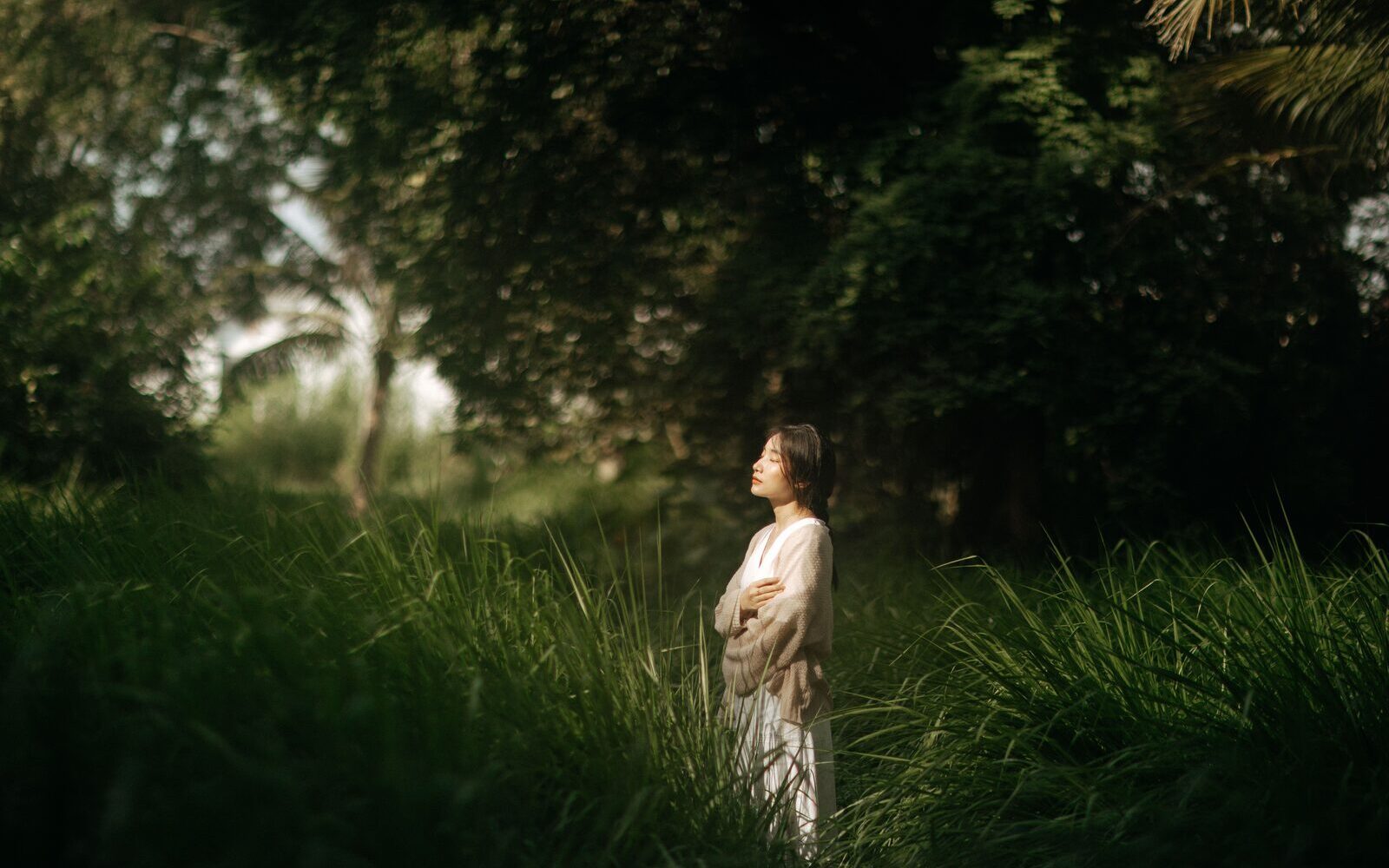
There is an image I keep returning to in my study of Japanese culture — a detail so small it should not have stayed with me, but it has. In downtown Sapporo, people buy takeout food or drinks, and then, instead of walking with them, they find a bench. They sit down. They open the food. They eat. And then they continue on.
That is it. That is the whole thing. And yet the more I have sat with it, the more I think it contains something essential — a relationship with time, with experience, with the body, that most of us in the West have quietly lost without noticing it was gone. We eat while walking. We work while resting. We scroll while talking. We are rarely doing only the thing we are doing. And we wonder, in a low-grade, persistent way, why nothing ever feels like enough. The same logic applies to what we own — buying less and choosing better is the material version of the same idea.
Japan doesn't tell you to slow down. It simply lives in a way that makes you wonder why you ever needed to fill all the space.
Ma — The Pause That Gives Everything Else Meaning
The Japanese word Ma (間) has no clean equivalent in English. It translates, loosely, as gap or pause — but that translation flattens it considerably. Ma is not emptiness in the Western sense of something absent. It is the meaningful space between things: between notes in music, between breaths, between the act of speaking and the act of responding. It is what gives what surrounds it its resonance.
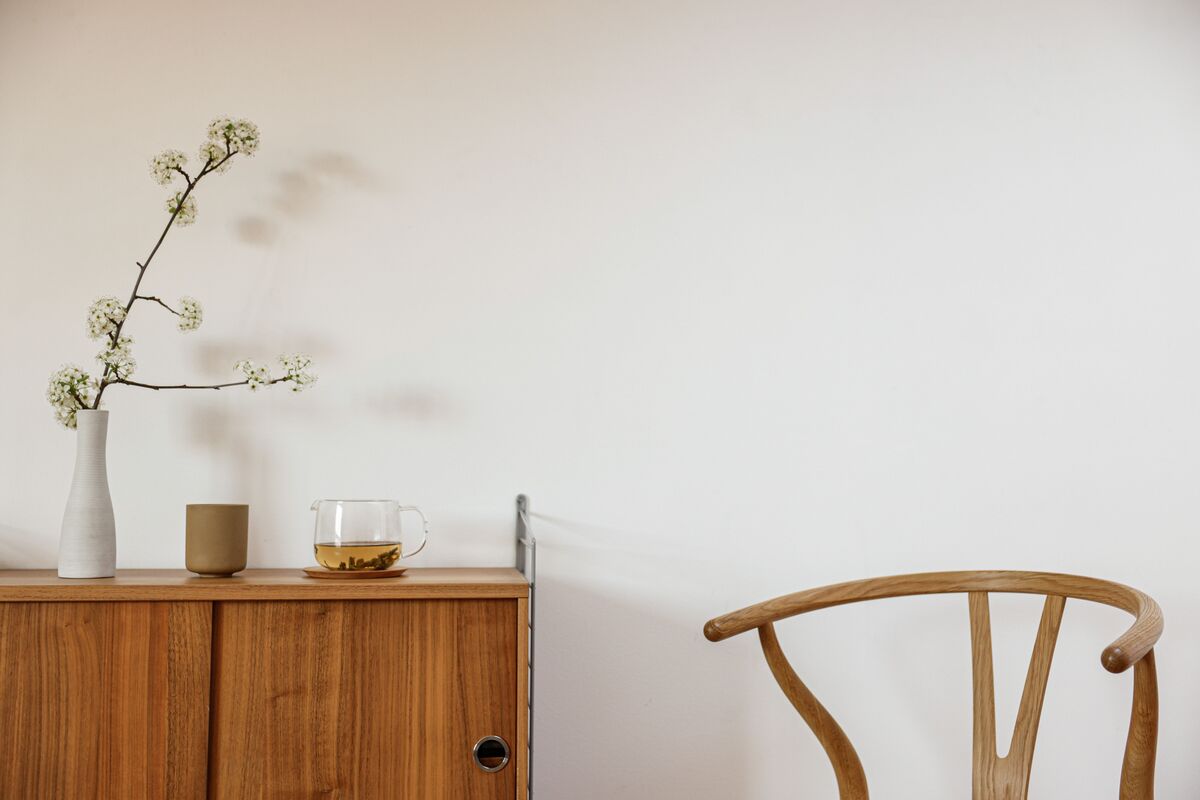
In Japanese architecture, Ma is the room you walk through before you arrive at the main space — designed not for utility, but for transition. In ikebana, the traditional art of flower arranging, what is left out of the arrangement is considered as important as what is placed. The empty space is not negative space. It is generative space. It is where the eye rests and where meaning accumulates.
I think about the Tokyo subway, which moves millions of people every day in near-complete silence. No one is on the phone. The ambient noise is low. People sit with their own thoughts, or look out the window, or simply exist in the movement from one place to another. There is no pressure to fill the auditory space with music or conversation. The commute is not a void to be occupied. It is, in the spirit of Ma, a pause — a pocket of time given the dignity of its own existence.
The poet Naomi Shihab Nye, describing what she learned from a Japanese student, defined the related concept of Yutori — spaciousness, margin, ease — as "a kind of living with spaciousness. Leaving early enough to get somewhere so that you know you're going to arrive early, so when you get there, you have time to look around." I have read that definition many times. Each time it locates something I have been doing wrong — filling every pocket of time until there is no time to simply look around at where I am.
Ma and Yutori together suggest something radical: that the pauses in your life are not the empty parts. They are the parts that give the rest of it shape.
Wabi-Sabi and the Beauty of Things as They Are
The Japanese aesthetic philosophy of Wabi-Sabi is built on a premise that Western culture treats as a failure: impermanence, incompleteness, and imperfection are not problems to be solved. They are the actual texture of a beautiful life.
Wabi, in its older sense, referred to the loneliness and simplicity of a hermit's life — the austere, quiet beauty of a rough-hewn thing. Sabi referred to the beauty that accumulates with age: the patina on copper, the wear at the corner of a wooden table, the way a linen cloth softens over years of use. Together they describe a way of seeing that finds the deepest beauty not in the polished and the permanent, but in the weathered and the real.
Walking through Japanese spaces, you notice this in ways that feel quietly startling to Western eyes. A restaurant plate arrives with the food arranged around significant empty space — the presentation honoring both what is there and what is not. A garden nourishes the viewer not through the abundance of its blooms but through their singularity, each one given enough room to be seen as itself. A room may have an entirely blank wall. Not because it hasn't been decorated yet. Because the blank wall is the decoration.
These choices are supported by a companion concept: Kanso, which describes the deliberate cultivation of order and simplicity in physical environments — not minimalism for its own sake, but clarity of purpose. Each object in the space is chosen. Each surface is given room to breathe. The effect is not sterile. It is remarkably restful, in the way that a room without visual noise lets the mind settle into something like quiet.
What Wabi-Sabi offers, practically, is a different relationship with the pursuit of perfect. The cracked bowl is not ruined — it is repaired with gold, in the tradition of kintsugi, and the fracture becomes part of its beauty. The imperfect morning is not wasted. The unfinished project is not a failure. These are not concessions to reality. They are, if Wabi-Sabi has it right, reality's most honest face.
Ma isn't emptiness. It is room to exist. The blank wall isn't unfinished — it's what lets you breathe.
Hara Hachi Bu — Stopping Before You're Full
The Okinawan practice of Hara Hachi Bu — eating until you are approximately eighty percent full, stopping before you feel completely satisfied — is often cited in discussions of longevity and the extraordinarily long healthy lives of Okinawan elders. But I am interested in it less as a dietary practice and more as a philosophy about the relationship between wanting and having.
The practice is built on a recognition that the body's signals arrive late. The sense of true fullness doesn't register for roughly twenty minutes after the moment of satiation. If you eat until you feel full, you have, by the time the signal reaches you, already eaten past what your body needed. Hara Hachi Bu is the practice of stopping before the confirmation arrives — of trusting that enough is, in fact, enough, even before you feel certain of it.
There is a word that extends this practice into life design: Hodo-hodo — a Japanese ethic that translates as "just enough," describing the active, intentional choice to hold back from maximum accumulation. Not from scarcity, not from lack of means, but from a settled conviction that more is not the direction of a better life. Hodo-hodo is the recognition that defining what enough means to you — in possessions, in commitments, in output, in consumption — is the prerequisite to ever experiencing it. Without a definition, enough is always just slightly beyond wherever you currently are.
Minimalism Is Always a Choice
One of the most important things I have understood through studying Japanese culture is that its relationship with simplicity is not a cultural default. It is a choice — made, every day, by individual people, against the full weight of the same pressures toward accumulation that exist everywhere in the modern world.
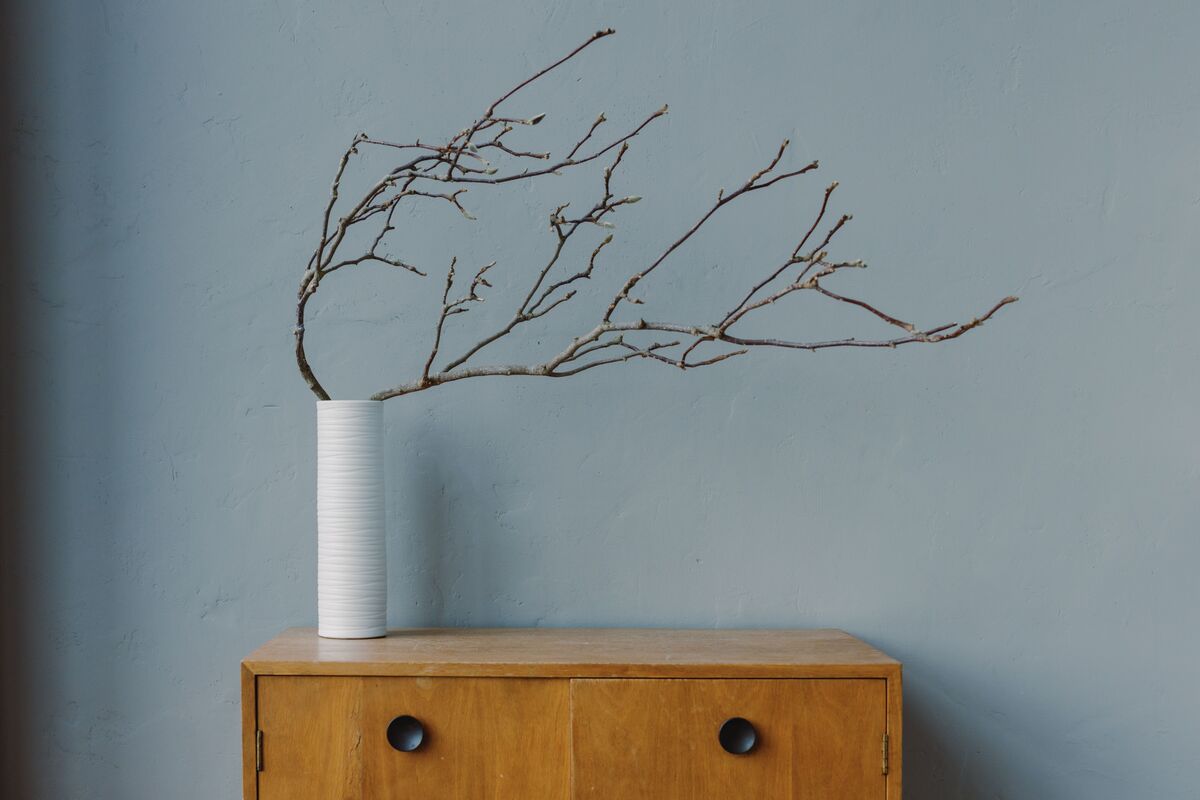
Japan has its own version of overwhelming abundance. Its stores can be packed floor to ceiling with appealing objects of every kind, a kaleidoscope of things designed to be wanted. The potential for clutter, for noise, for a life packed to its edges is as present there as anywhere. The peaceful, ordered homes and the quietly uncluttered lives that come to represent the culture did not arrive by default. Someone decided not to buy the thing. Someone chose the blank wall. Someone left the margin in their schedule and protected it.
This is either comforting or clarifying, depending on where you are with it. It means there is no culture of origin required. There is no country you would need to have grown up in, no particular aesthetic sensibility you would need to have inherited. The choice is available to all of us, wherever we are — whether we are living out of a suitcase or trying to clear the kitchen counter, whether we are just beginning or have been at this for years. It is a lifelong project, and the starting point is always right here.
What You Bring Home
I don't think the point of these concepts is to recreate Japan in your living room, or to adopt a philosophy wholesale from a culture that has its own full context and complexity. The point is something smaller and more immediate: permission.
Permission to let the calendar have a blank afternoon in it without immediately filling it. Permission to find the thing that's worn and imperfect and decide it is beautiful exactly as it is. Permission to stop eating — or buying, or consuming, or committing — before the feeling of enough arrives, on the understanding that enough was already there. Permission to sit down on the bench before you open the food.
Just as creating white space on a shelf gives meaning to the few objects placed there, white space in a day gives meaning and dignity to the hours. The pause is not the gap between the real things. In many cases, the pause is the realest thing. Ma isn't emptiness. It is room — room to exist in your own life without filling every inch of it with noise and motion and the breathless accumulation of more.
Japan offered me a different question. Not: what more could I add? But: what would this look like if it had room to breathe?
I am still learning how to live inside the answer.
What if enough is not a place you arrive at — but a question you finally stop running from?
Ma, Wabi-Sabi, Hara Hachi Bu — each one is a different angle on the same quiet recognition: that the blank spaces in a life are not absences. They are what gives everything else its shape. You don't have to travel anywhere to live this way. You just have to decide, once, to sit down on the bench before you open the food. The rest follows from there.