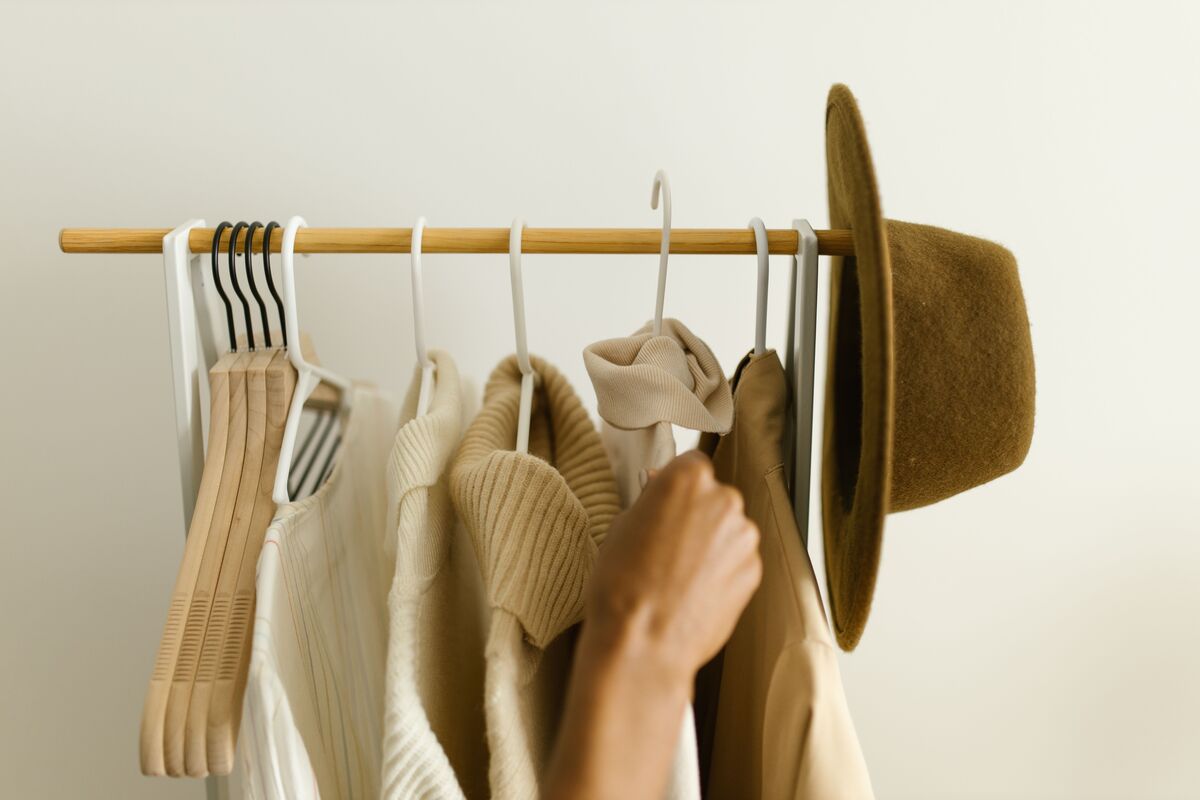
Here is a scene I know intimately, and I suspect you might too. It is 7:40 in the morning. You are standing in front of a closet packed so densely the hangers won't slide, and you are saying out loud, to no one, I have nothing to wear.
You are not being dramatic. You are being accurate. What you have is a great deal of fabric. What you don't have is a wardrobe — a small, coherent, functioning collection of things that fit, that last, that you actually reach for. The abundance isn't the solution to the problem. Somewhere along the way, the abundance became the problem.
I want to talk about how I got out of that, because the shift was less about discipline than I expected and more about arithmetic. Once I did the math — on money, on time, on what it actually costs the planet to keep a wardrobe on rotation — the choice stopped feeling like sacrifice and started feeling like the obvious move.
Buy less, choose well, make it last.
Vivienne Westwood
Westwood said this from inside the industry that profits most from you doing the opposite — which is precisely what makes it worth listening to. She wasn't selling minimalism as an aesthetic. She was pointing at a system and saying, quietly and unmistakably: this cannot continue, and you can opt out.
First, the Part Nobody Wants to Look At
I'm putting the environmental case first, not last, because it is the most important part of this conversation and the part most likely to be skipped if I bury it at the bottom under a shopping guide.
The fashion industry is responsible for an estimated 8 to 10 percent of global carbon emissions — more than all international flights and maritime shipping combined. Let that sit for a moment. We have collectively agreed that flying is a climate issue worth discussing at dinner parties. We have not, generally, extended that scrutiny to the £12 top bought on a Tuesday because it was there.
The water figures are equally difficult. Producing a single cotton t-shirt takes roughly 2,700 litres of water — approximately what one person drinks in two and a half years. The industry as a whole consumes around 93 billion cubic metres annually, enough to meet the needs of five million people. In cotton-growing regions, this is not an abstraction. The Aral Sea, once the fourth-largest lake on earth, is now largely desert, drained substantially by irrigation for cotton.
And then there is what happens at the end. The equivalent of one garbage truck of textiles is landfilled or incinerated every single second. Less than one percent of clothing is recycled into new clothing. The rest becomes waste — much of it shipped to countries in the global South, where mountains of discarded Western clothing now form landscapes visible from space. Chile's Atacama Desert holds an estimated 39,000 tonnes of it.
There is one more thing, and it is the one I find hardest to shake. Synthetic fabrics — polyester, acrylic, nylon, the materials that make cheap clothing cheap — shed microplastic fibres every time they're washed. These fibres pass through water treatment and into rivers, then oceans. Textiles are estimated to account for around 35 percent of all ocean microplastic pollution. Which means the fleece jacket bought on impulse three years ago is, right now, still quietly disassembling itself into the water supply.
None of this is meant to induce despair. Despair is a poor motivator and an even worse aesthetic. But it is meant to establish something: the decision to buy less is not a lifestyle preference. It is, in the most direct sense available to an individual, a climate action. And unlike most climate actions, it costs you nothing. It saves you money.
The Arithmetic Nobody Runs
Which brings me to the case that finally moved me, because I am, in the end, a person who responds to a spreadsheet.
The metric that changes everything is cost per wear. Not price. Price is a single moment; cost per wear is the truth over time. Run it once and the entire logic of cheap purchasing collapses.
A well-made wool coat at £300, worn 20 times a winter for ten years, costs £1.50 each time you put it on. A £60 synthetic version, worn perhaps 25 times before the lining tears and the shape gives out, costs £2.40 per wear — and you will buy it four more times over that same decade. The expensive coat is the cheap one. It always was. We simply weren't measuring it in the unit that mattered.
The same arithmetic runs through everything. The pan that warps. The chair that wobbles within a year. The boots resoled twice versus the boots replaced five times. There is a well-known observation about this — often attributed to Terry Pratchett's Sam Vimes — that a man with good boots who spends fifty dollars once will still have dry feet in ten years, while the man who can only afford ten-dollar boots will have spent a hundred dollars and still have wet feet. Buying well is a privilege, and pretending otherwise is dishonest. But where the choice exists, choosing badly is expensive twice over.
What You Get Back Besides Money
The financial case is the easiest to argue and the least interesting outcome. What genuinely surprised me was the time.
Everything you own asks something of you. It has to be stored, cleaned, sorted, moved, mended, decided about, and eventually disposed of. A hundred garments is not just a hundred garments — it is a hundred small ongoing obligations, and the cost is paid in the currency you can never earn more of.
When the collection shrinks and the quality rises, something quietly lovely happens: getting dressed stops being a decision. Everything fits. Everything works with everything else. There is no archaeological dig through items you don't like to find the three you do. The morning gets shorter and the mood arrives intact.
This is the part the minimalism industry gets wrong, incidentally. It sells you empty white rooms as an aesthetic, as though the point were the absence. The point is not absence. The point is that what remains is entirely, unambiguously yours. A room with eight things you love in it is not a spartan room. It is a considered one.
- Time — Every object requires storage, cleaning, sorting, maintenance, and eventually disposal. It compounds.
- Attention — Decision fatigue is real and measurable. More choices produce worse decisions and more exhaustion.
- Money — Not just the purchase, but the replacement cycle. Buying cheap twice costs more than buying well once.
- The planet — Every unworn garment carries its full water, carbon, and labour cost regardless of whether you wear it.
- A functioning wardrobe — Fewer pieces that all work together beats abundance that works for nothing.
- Actual style — Personal taste can only emerge when you stop chasing trends and start choosing what's genuinely yours.
- Financial slack — Fewer, better purchases free up real money. Most people notice it within the first year.
- A lighter footprint — The most sustainable garment is the one already in your closet. The second is the one built to stay there.
How to Actually Tell if Something Is Well Made
Here is where I'll be most useful, because "buy quality" is advice that means nothing without a method — and price is a famously unreliable proxy. Plenty of expensive things are badly made. The skill is learning to read an object.
Start with the fabric label
Turn it over before anything else. Natural fibres — cotton, linen, wool, silk, cashmere — breathe better, last longer, age more gracefully, and biodegrade at end of life. Polyester is plastic. It will pill, it will trap odour, it will shed microplastics for the entirety of its very long existence. A blend with a small percentage of elastane for stretch is fine and often necessary. A blend that's 80 percent polyester is a plastic garment with a cotton accent.
Hold it up to the light
The single fastest quality test there is. Dense, opaque weave means more fibre, better construction, longer life. If you can see the window through a supposedly opaque garment, you're holding something that will lose its shape within a season.
Interrogate the seams
Pull gently at a seam — it should hold with no gaping between stitches. Turn the garment inside out: finished seams (French or overlocked) signal care; raw, fraying edges signal speed. Count the stitches in an inch. More stitches means a stronger seam. And check whether stripes and patterns line up across the seam, because matching a pattern costs the manufacturer extra fabric and extra time. When they've done it, it tells you something about everything else.
Test the hardware
Zippers should be metal, and should glide without catching. Buttons should be sewn with a shank (a small stalk of thread beneath) rather than flat against the fabric, and a good garment includes a spare. Cheap hardware is where inexpensive clothing fails first — usually about three weeks after you've started relying on it.
Feel the weight
Quality has heft. A well-made coat, a good towel, a proper pair of jeans — they have a density you can feel in your hand before you've read a single label. Your instinct here is better than you think. Trust it.
Where to Begin Without Burning It All Down
A word of caution before the practical part: the worst possible response to this article would be to throw out everything you own and repurchase it in linen. That is not sustainability. That is consumption wearing a better outfit.
The most sustainable item is the one you already have. This philosophy applies to what comes next, not to a dramatic purge of what came before. Wear things out. Mend them. Let the transition happen at the speed of actual replacement.
Five things that changed how I buy — in the order I'd recommend doing them.
- Take a real inventory first. Not a purge — a count. Lay it all out. Most people are genuinely shocked by the volume, and by how much of it they'd forgotten owning. You cannot make good decisions about what to add until you can see what's already there.
- Institute a 30-day pause. For anything non-essential, wait a month. Write it down, put it aside, return to it. The overwhelming majority of wanting dissolves within the first week — which tells you the desire belonged to the moment, not to you.
- Calculate cost per wear before you buy, not after. Honestly estimate how many times you'll use it. If the number is under ten, you're not buying an item — you're renting a feeling at a very poor rate.
- Buy for the life you have. Not the imagined life with different weather, a different job, a different body, a different social calendar. This is where most wasted money goes: dressing an aspirational stranger who never arrives.
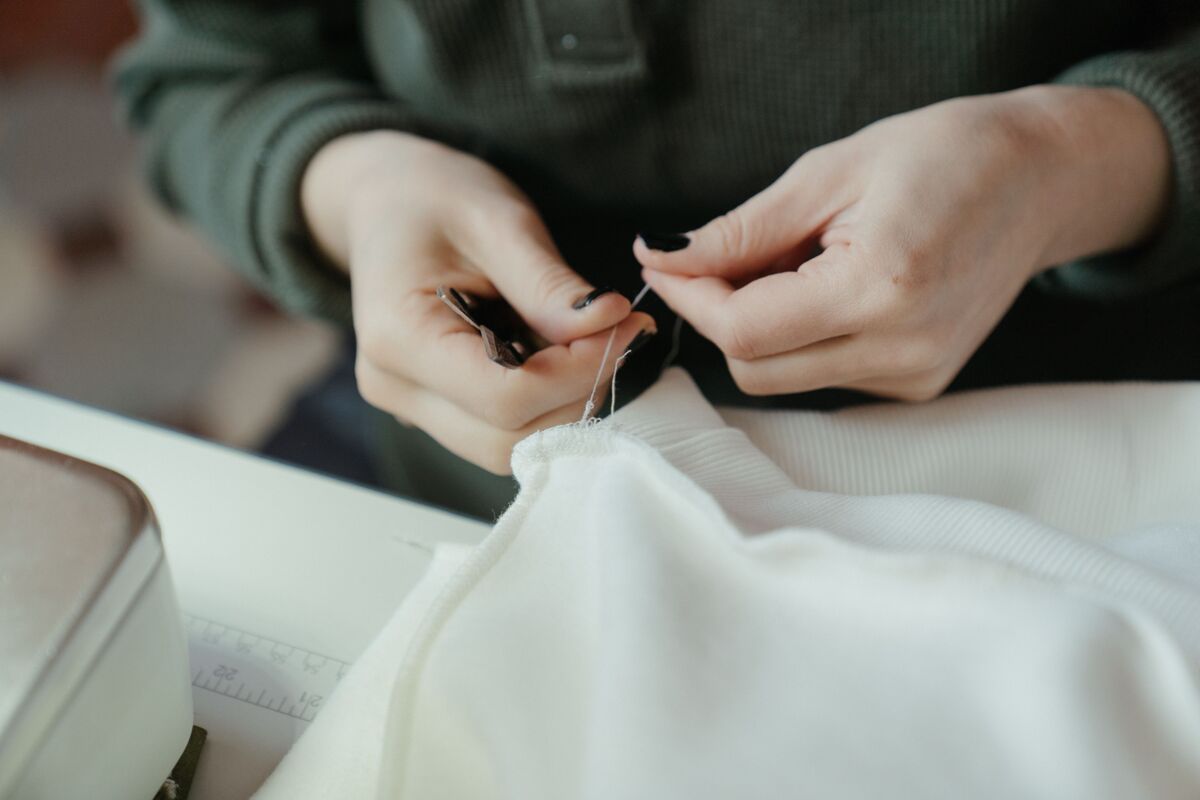
- Learn one repair. Sew a button, patch a seam, condition leather, resole a shoe. One skill radically extends the life of everything you own — and shifts your relationship to your things from disposable to tended.
The Part That Surprised Me Most
I expected to feel restricted. I expected to miss the small hit of a new thing arriving — and I did, for about six weeks, in the specific way you miss any habit.
What I did not expect was that owning less would make me feel more like myself, not less. When you stop buying whatever is in front of you, you have to develop an actual position on what you like. Taste is not something you have; it is something you build, and it can only be built through refusal. Every no is a definition.
My wardrobe now is small enough that I could list it from memory. Every piece is something I chose deliberately, most of them are natural fibres, several will outlive me, and one is a wool coat that has been through eight winters and is, if anything, better than when I bought it. I know where things came from. I know how to fix them. Getting dressed takes four minutes.
And there is a quieter satisfaction underneath all of it, which is this: I am no longer participating, at least not enthusiastically, in a system that drains rivers and fills deserts with cast-off clothing so that a t-shirt can cost less than a coffee. That is not nothing. Multiplied across enough people, it is the only thing that has ever changed an industry.
Enough is not a smaller life. It's a life you can actually see.
Buying less isn't deprivation and it isn't an aesthetic — it's the recognition that everything you own costs something to make, something to keep, and something to throw away, and that the bill is coming due somewhere whether or not it arrives on your statement. Choose fewer things. Choose them properly. Keep them for a long time. It is better for your money, kinder to your mornings, and it is, right now, one of the most consequential things an ordinary person can quietly decide to do.