Let me tell you about a mineral you have almost certainly underestimated. It doesn’t trend the way collagen does. It isn’t sold in a beautiful dropper bottle. Most people couldn’t tell you what it does, beyond a vague sense that it’s “good for you.” And yet if I had to name the single nutrient most quietly responsible for whether you sleep well, feel calm, and look rested, I would name this one without hesitation. It’s magnesium — and after years of working with nutrition, I’ve come to think of it as the mineral that holds the whole room together while nobody’s watching.
The Mineral Behind Everything
Here is the fact that reframes it. Magnesium is a required cofactor in more than 300 enzymatic reactions in the human body. Not three. Not thirty. Over three hundred. It’s involved in turning your food into usable energy, in building the proteins that repair you, in steadying your blood sugar and your heartbeat, in the firing of every nerve and the relaxing of every muscle. When a nutrient is threaded through that many processes, its absence doesn’t show up as one clear symptom. It shows up as a vague, hard-to-name sense that your body isn’t quite coping — the poor sleep, the tension, the low mood, the fatigue that coffee can’t touch.
And most of us are running a little short. Between soil depletion that has thinned the magnesium in our produce, diets heavy in refined foods, and the simple fact that stress itself burns through magnesium, low intake is one of the most common nutritional gaps in modern life. The frustrating irony is that we deplete it fastest exactly when we need it most.
Magnesium is the nutrient your body spends most freely during stress — and replaces least often.
Why It Helps You Sleep
If you lie down exhausted and your mind refuses to follow, magnesium is part of the reason a body can feel wired and tired at once. It supports GABA — the neurotransmitter whose entire job is to tell your nervous system, you are safe now, you can power down. Without enough magnesium, that “off switch” works less smoothly, and the brain keeps idling when it should be drifting.
It also helps regulate melatonin, the hormone that governs your sleep-wake rhythm, and relaxes the physical tension that keeps you shifting on the pillow. This is why low magnesium is so consistently linked to insomnia and light, broken sleep — and why, for a lot of people, gently topping it up is one of the most underrated paths to deeper rest. (It pairs beautifully with the rest of a calming evening routine that protects your sleep.)
Why It Softens Stress
Magnesium sits right at the controls of your stress response. It helps regulate the HPA axis — the hypothalamic-pituitary-adrenal system that decides how much cortisol, your primary stress hormone, floods your body and when. Adequate magnesium is associated with lower cortisol and a calmer baseline; it also blunts the release of stress hormones, so you’re less likely to be jolted into fight-or-flight by an ordinary Tuesday.
But remember that cruel loop: stress depletes magnesium, and low magnesium makes you more reactive to stress. So during your hardest, most demanding weeks — the ones where you feel frayed and short-fused — your body is quietly spending down the very mineral that would help you weather them. Replenishing it isn’t indulgent. It’s maintenance. (If cortisol is your particular struggle, this pairs with other gentle, proven ways to lower it naturally.)
Why It Shows on Your Skin
This is the part that surprises people. Magnesium has genuine anti-inflammatory properties — and inflammation is the quiet common thread beneath so many skin complaints, from redness and reactivity to the breakouts that flare when you’re stressed or under-slept. When you calm inflammation from the inside, the skin often follows.
There’s also the indirect route, which may matter even more. Skin is not a sealed surface; it reflects what’s happening beneath it. By supporting deeper sleep and steadier stress hormones, magnesium improves the two conditions your complexion is most sensitive to. You can spend a fortune on what you put on your face, but a calmer, better-rested body is one of the most reliable things you can offer your skin — and no serum can replicate it.

Where to Actually Find It
Here is the genuinely good news: you don’t need a cabinet of supplements to get more magnesium. You need a slightly more intentional plate. These are among the richest and most enjoyable everyday sources — the ones I’d fold into your week first.
Pumpkin seeds & chia seeds — the quiet powerhouses. A single ounce delivers around 37% of your daily magnesium, making seeds one of the most efficient sources on the list. Scatter pumpkin seeds over a salad or soup; stir chia into overnight oats or a pudding. Small, cheap, and remarkably dense.
Dark leafy greens — spinach and Swiss chard. About 19% of your daily value in half a cooked cup. Cooking wilts them down so you can eat far more than a raw handful, and they slip easily into eggs, pasta, soups, and stir-fries. Greens are the effortless daily baseline.
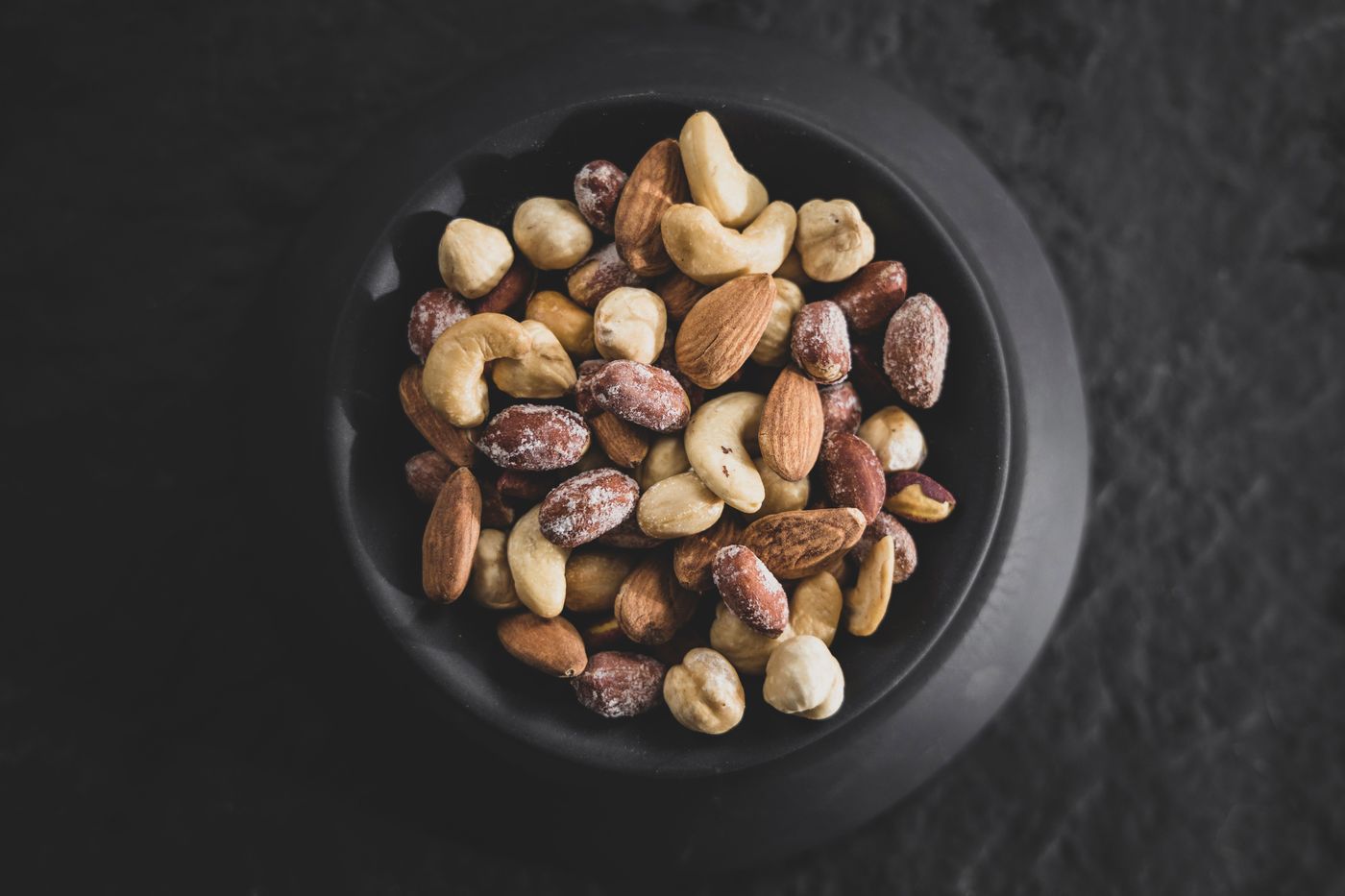
Almonds & cashews — the pocketable option. Roughly 19% of your daily value per ounce, alongside protein and healthy fats that keep blood sugar steady. A small handful as an afternoon snack is one of the simplest upgrades you can make — no cooking, no planning.
Banana + tart cherry juice — the bedtime pairing. A ritual worth stealing. The banana contributes magnesium and potassium to relax muscles; the tart cherry juice is a natural source of melatonin. Together they make a gentle, genuinely sleep-supportive evening snack that tastes like a small kindness rather than a supplement.
Round it out with dark chocolate (yes, really), black beans, avocado, and whole grains, and you’ve built a magnesium-rich week without a single pill. Food first, always — and if you and a doctor decide a supplement makes sense on top of that, forms like glycinate tend to be gentle and calming.
Sometimes the fix isn’t one more thing to add. It’s one quiet thing you’ve been missing.
We’re so used to chasing the elaborate solution that we overlook the humble one. Magnesium won’t solve everything — nothing does. But if your sleep is thin, your nerves are frayed, and your skin keeps flaring, it’s worth asking whether the mineral running 300 reactions in your body has quietly been running low. Start with the seeds and the greens. Your body has been waiting for them.