There is a conversation happening in every relationship that never gets spoken out loud. It happens through the way someone's hand finds yours in a crowd. Through a forehead kiss placed there on a Tuesday morning with no occasion for it. Through the arm that reaches across a dark room at 3 a.m. to check that you're still there. This conversation has been going on since the beginning of your relationship — longer than the two of you have probably realized. And most people go years without ever actually discussing what they've been saying.
That's what a touch language is. Not just whether touch matters to you as a love language — it's the specific, accumulated vocabulary of what different touches mean between two particular people. And like any language, when you stop being fluent in each other's, the distance that grows between you is real — even when you're in the same room, in the same bed, close enough to reach.
Touch Has Grammar. Most of Us Just Don't Know We're Speaking It.
When Dr. Gary Chapman introduced physical touch as one of the five love languages, it changed the way a lot of people understood themselves and their relationships. But physical touch as a love language tells you something about quantity — how much touch a person needs to feel loved, where it ranks among their other preferences. It doesn't tell you much about the texture of it. About the specific vocabulary.
Worth naming directly, because it often goes unsaid: physical touch as a love language is widely misunderstood to be primarily about sexual intimacy. It isn't. Research on affectionate contact consistently shows that small, consistent, non-sexual touches — a hand on someone's back while they're cooking, a lingering squeeze before you leave the house, holding hands in the car — trigger the release of oxytocin, sometimes called the bonding hormone, in both people. The biochemistry doesn't distinguish between a forehead kiss on a Wednesday morning and a more intimate act. For many people who identify physical touch as their primary love language, the daily non-sexual gestures carry more emotional weight than they realize — and their absence, far more cost.
And there is a vocabulary. Touch has grammar: there's a difference between a hand that rests on your shoulder and a hand that grips it. A kiss on the crown of someone's head when they're falling apart says something entirely different from a kiss placed there on a Wednesday before you leave for work. Two people can exchange what looks, from the outside, like the same gesture — a hand held, a back touched briefly in passing — and be communicating completely different things. Or saying nothing at all. Or saying something one person intends and the other receives as something else entirely.
That gap — between what we mean with our hands and what the other person hears — is where so much quiet disconnection lives.
The Vocabulary We Already Have
When I started paying attention to touch the way you pay attention to words in a language you're trying to learn, I realized there are really only a handful of things touch ever says. But within each of those categories, the dialect between two specific people becomes extraordinarily private and precise.
Comfort touch is the hand that finds you in the dark when you can't sleep. The arm that comes around you when you're crying — not to stop you, not to fix anything, just to stay. It asks nothing. It says: I'm not leaving. Research on the physiology of embrace has found that a hug held for fifteen to twenty seconds produces a measurable shift in the nervous system — cortisol drops, oxytocin rises, and something in the body genuinely settles. Most of our daily embraces last around three seconds. We are moving through the very gesture that's supposed to hold us close. Comfort touch, at its best, refuses that hurry. It is, I think, the most underrated touch in a long relationship precisely because it requires the most presence. You have to be actually paying attention to give it.
Appreciation touch is the squeeze of the hand at a dinner table when something goes right. The brief pressure on the shoulder when you're walking past. Touch as a sentence that ends with a period, not a question mark. It's easy to let this one drop first when life gets full — it seems small, optional — but the relationships where it disappears stop feeling like partnerships.
Presence touch is the foot that finds yours under the table. The hand on a knee on a long drive. Touch that doesn't announce itself, doesn't ask for a response, just says: I know you're here, and that's exactly where I want to be. I've come to think of this as the connective tissue of a relationship — invisible when it's healthy, suddenly and acutely felt when it goes missing.
Playful touch is the shoulder bump, the unexpected squeeze, the touch that has an exclamation point. The touch that laughs. It's easy to overlook how much work this one does — playfulness signals safety. When two people can still be easy and light with each other's bodies, it usually means they're still genuinely at home with each other.
And then there's the touch that belongs only to the two of you. The one that isn't given to anyone else. The specific way someone traces along your collarbone. The exact pressure of a forehead pressed against yours at the end of a long day. The private shorthand of years. These are the words in a shared language that took time to build — and the ones that are most irreplaceable when they go quiet.
The touch that belongs only to the two of you — the one that isn't given to anyone else — is the most intimate vocabulary you'll ever share. And it takes years to build, and very little time to forget.

How the Language Goes Quiet
The thing about touch language is that it can drift without either person noticing, at first. Life becomes full. The meaningful touches get replaced by functional ones — the goodbye kiss that became automatic, the hello that barely lands. You're still touching. The language is still technically being spoken. But the grammar has simplified into something flat. Subject. Verb. Full stop.
Because this happens in the register of the body rather than words, it can go much further before it gets named. We notice when conversation between us has become shallow. We're less practiced at noticing when our touch has done the same.
I think this is one of the quieter heartbreaks in long relationships. Not a dramatic withdrawal. Not a fight. Just a gradual reduction in vocabulary. Until one day you realize you've been speaking in pleasantries — present, but not really saying anything. And the strange thing is that both people often feel the loss without being able to name exactly what's missing, because what's missing was never formally named to begin with.
This is also, incidentally, why "we just grew apart" is such a common and such an unsatisfying explanation for what happened in a relationship. Growing apart rarely happens in one dramatic moment. It happens in the accumulating absence of small, deliberate contact — in the vocabulary that wasn't tended.
Becoming Fluent Again — or for the First Time
The starting point is attention. Simply noticing what your touches actually say — not what you intend them to say, but how they land for the person receiving them. These are often two very different things, and most of us have never sat with that difference long enough to learn from it.
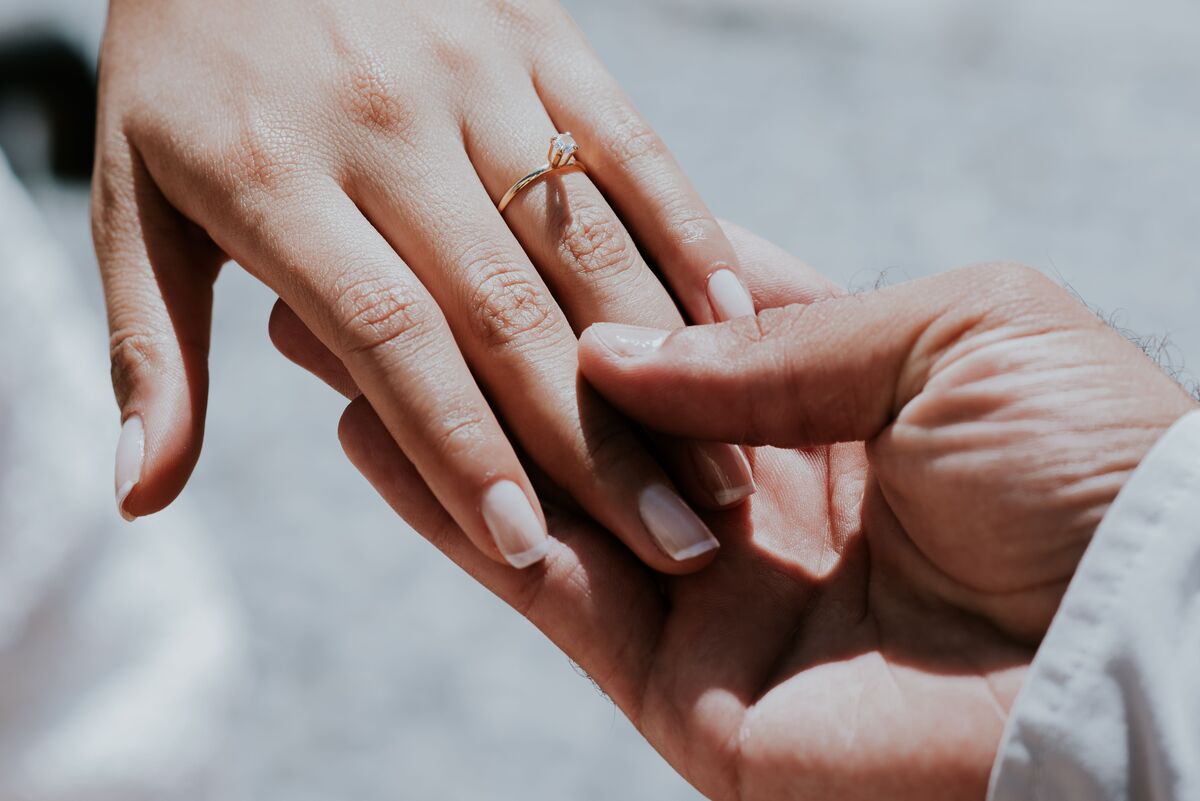
There's a practice I keep coming back to, one that doesn't require a particular setting or any kind of expertise. Think of it as a touch conversation. No phones, no agenda, twenty minutes when neither of you has anywhere else to be. Taking turns, each of you offers a touch — deliberate, intentional, whatever kind feels true to you in that moment — without naming what you're trying to communicate. Comfort. Appreciation. Playfulness. Desire. Just the touch itself.
And the other person says what they received. Not what they think you meant. What they actually felt.
Sometimes a touch meant as tender lands as possessive. Sometimes something you thought was small and ordinary meant more to them than you knew. The conversation that follows isn't about who got it wrong — it's about learning each other's dialect. About discovering which gestures have become shared vocabulary, and which ones still need translation. It's quieter than most conversations, and somehow more honest.
What makes this valuable isn't the exercise itself. It's what it reveals: that touch has been communicating on your behalf all along, often without your conscious participation. That there is a language between you, even if it's never been spoken about directly. And that attending to it — even briefly, even imperfectly — shifts something. You start touching more carefully. More deliberately. And being more careful and more deliberate about touch tends to make both people feel more seen.
Why This Matters More Than Most Conversations About Love
Touch literacy and emotional intimacy aren't separate things. They map onto each other almost exactly. The degree to which you can be present, honest, and intentional in your physical language is usually the degree to which you can be those things in your emotional language too. And the reverse tends to be true: when a relationship's touch vocabulary goes flat, it's rarely just the touch that's contracted.
People who experience physical touch as their primary love language describe the absence of affectionate contact not as a preference going unmet, but as something closer to emotional hunger — a sense of being present in a relationship but not truly held by it. The distinction matters. It means that small gestures — a hand rested on a shoulder while passing through a room, a foot that finds yours under the table — are not decorative. They are load-bearing. They are how some people know, in real time, that they are still loved.
A relationship with a rich, evolving touch vocabulary is one where both people are still paying attention to each other. Where something is being said — and heard — in the register of the body as well as words. That's not something that happens by accident. It happens because two people kept choosing, in small and daily ways, to stay fluent in each other.
You don't have to be naturally touchy or particularly expressive to do this. You don't need a workshop or a therapist or a book. You need to start noticing — what you're saying with your hands, and what's being said to you. And then you need to say it a little more intentionally than you did yesterday.
Your touch language is still there.
It may have gone quiet. It may have simplified into something functional and automatic. But the fact that you're thinking about this at all means part of you remembers what it felt like when it was fuller. That memory is the place to begin. Not with a grand gesture or a long conversation. With one deliberate, unhurried touch tonight — one that says what you actually mean. And then letting the language grow back from there.