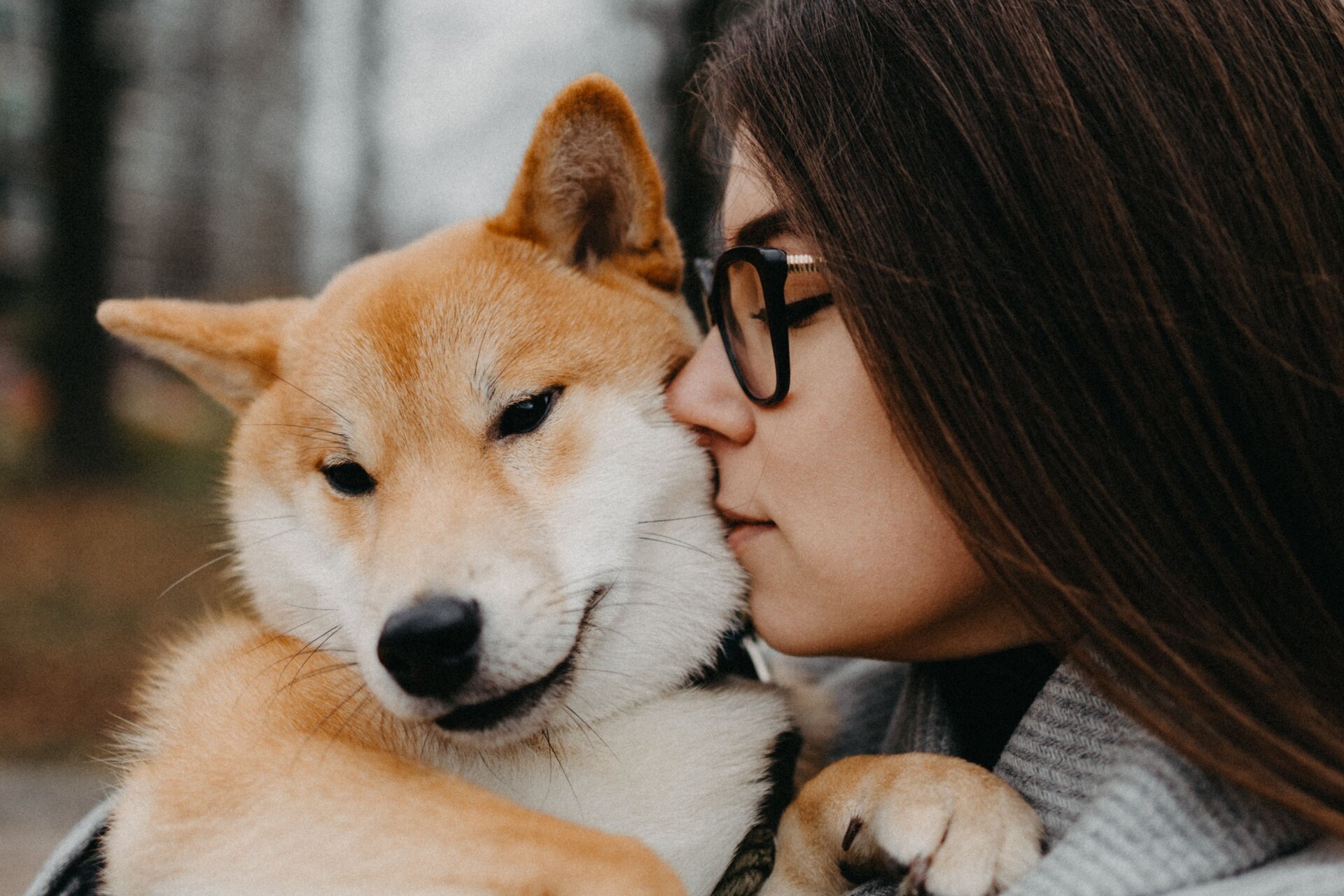
The first time I understood what my dog was doing to me, I was sitting on the kitchen floor at 2 a.m., holding him through a storm, and I noticed that I wasn't thinking about anything else. Not the deadline I was avoiding, not the conversation I was replaying, not the running tally of everything I'd left undone. Just him. His ears flat, his heartbeat fast under my palm, and the specific, uncomplicated job of being present for a creature who had no other resource but me.
It was the most focused I'd been all week.
I've thought about that moment a lot since. Not as a sweet memory of dog parenthood — though it was that too — but as evidence of something I hadn't expected when I brought him home. I thought I was getting a companion. I didn't know I was signing up for the most sustained emotional education of my adult life.
The Mirror With Four Paws
There's a specific piece of science I keep coming back to, because it reframes everything about what it means to live with a dog. Research has found that dogs don't just respond to our emotional states — they synchronize with them. Their cortisol levels rise and fall in tandem with ours. Their heart rates mirror ours under stress. When you walk into the room tightly wound, they feel it before you've said a word or done a thing. They are biological barometers for the state you're actually in, not the state you're performing.
This matters more than it sounds. Most of us move through our days in a kind of dissociation from our own emotional state — managing the surface while the interior runs on autopilot. A dog makes that split visible. You can't arrive home at the end of a hard day and mask it. They know. And if you want to be a good companion to them, you have to learn to manage not just your behavior, but the energy underneath it. That's a significantly harder and more valuable skill.
What dogs require of us, in other words, is not performance. It is regulation. And the difference between those two things is the difference between coping and actually becoming someone more capable of presence.
You might also want to read
Five Things a Dog Quietly Forces You to Practice
None of what follows is a metaphor. These are literal skills, developed through the specific daily demands of caring for an animal who cannot negotiate, rationalize, or pretend. I've become measurably better at all of them — not because I worked at them directly, but because I had no choice.
Dogs don't make mistakes out of defiance. They chew things out of anxiety, have accidents out of confusion, and test boundaries out of genuine uncertainty about what's expected of them. There is no spite in any of it. Which means when something goes wrong, the only response available to you — the only one that actually changes anything — is patience. Not the thin, performative kind that's really just suppressed frustration. The actual kind, that comes from understanding why the other person (creature) did the thing they did and accepting that your job is to try again more clearly. I've learned more about responding instead of reacting from my dog than from any mindfulness practice I've attempted.
Because a dog's stress response is biologically linked to yours, your own nervous system becomes part of the caregiving equation. You cannot project calm you don't have. You cannot rush a walk and expect them to be settled. You have to actually arrive — in your body, in your breathing, in the space — before they can. This forced self-regulation spills outward in ways I didn't expect. I notice my own cortisol rising faster now. I've become more aware of what I sound like before I speak. I've started treating my own emotional state as relevant information rather than just background noise, because I've had years of practice noticing what it does to someone I love.
There's a version of empathy that costs very little — recognizing someone else's feeling and nodding at it from a comfortable distance. Then there's the version that requires you to actually reorganize your life around a vulnerability that isn't yours. Dogs produce the second kind. Their needs don't pause for your schedule. Rain still means a walk. A scared dog still needs your full attention even when you've had a terrible day. Caring for a creature who cannot tell you what they need — who can only show you, through behavior and body language and the specific way they hold themselves — builds a quality of attention that eventually becomes impossible not to extend to the people around you as well.
Dogs don't learn through argument, explanation, or logic. They learn through repetition, timing, and the slow, incremental building of trust through consistent behavior. Which means the only training tool that works is your own consistency — the same word, the same tone, the same response, delivered reliably enough that a pattern becomes legible. For someone who operates mostly in words and reasons, this was one of the more humbling recalibrations. You can't negotiate your way through it. You can't explain. You just have to do the thing, again and again, until the doing becomes the language. I am significantly more patient with slow processes than I was before I tried to teach an eight-week-old dog what "sit" meant.
Living with a dog is a graduate seminar in body language. You learn to read the tail — not just wagging or not, but the height of the wag, the speed, the stiffness. You learn the difference between the ears-forward curiosity and the ears-flat fear. You learn what tension in the jaw signals, what a slow blink means, what it looks like when a dog is about to bark versus when they're genuinely settled. And because you've spent years developing this kind of observational precision with one creature, you start to notice it in people too. The colleague who says everything's fine but is holding their shoulders near their ears. The friend who laughs at the wrong moments. Non-verbal fluency, once developed, doesn't stay contained to its original classroom.
"A dog doesn't ask you to perform patience. It asks you to actually develop it — through the specific, daily, unglamorous practice of showing up for a creature who has no idea you're tired."
Where These Skills Actually Go
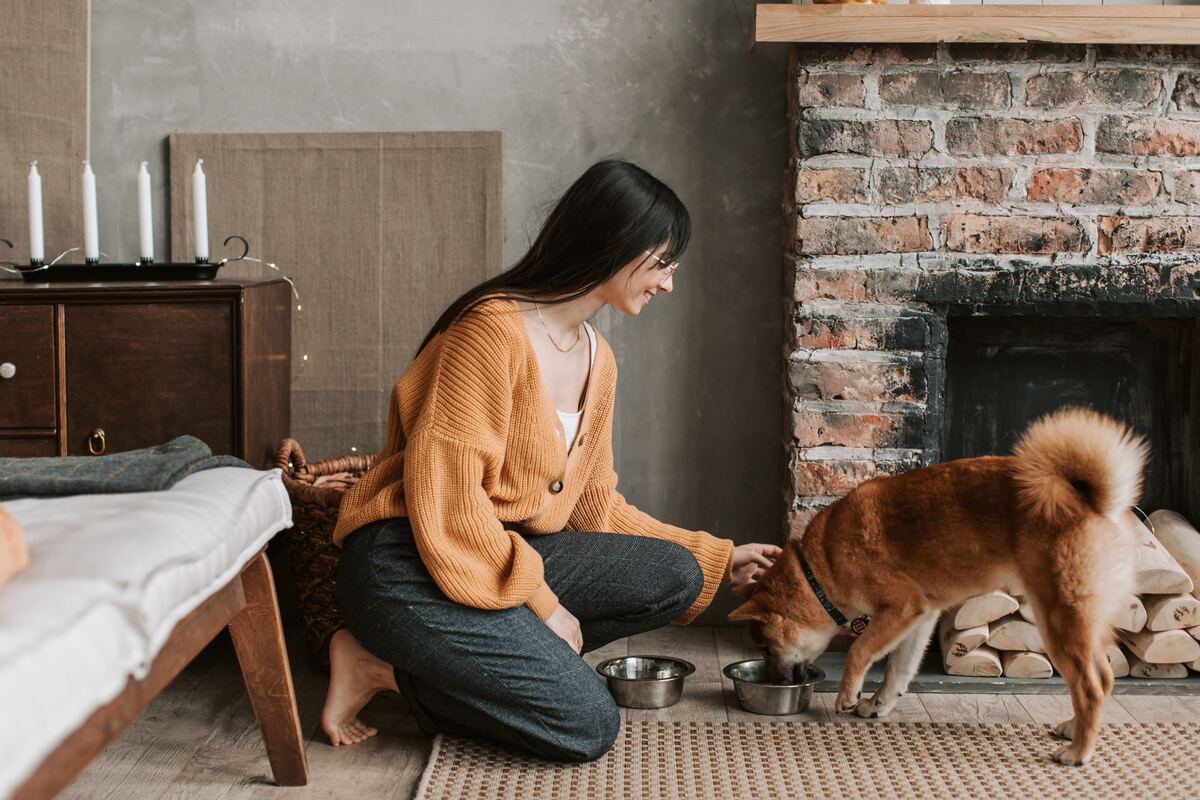
One of the things I find most interesting about the research on human-animal bonds is that the benefits don't stay siloed in the relationship that produced them. Dog owners show higher scores on empathy measures, more attentive communication behaviors, and better emotional regulation under stress than non-owners — even in contexts that have nothing to do with dogs. You practice the skill with your dog and then you carry it into the rest of your life without necessarily noticing the transfer.
The Thing Nobody Warns You About
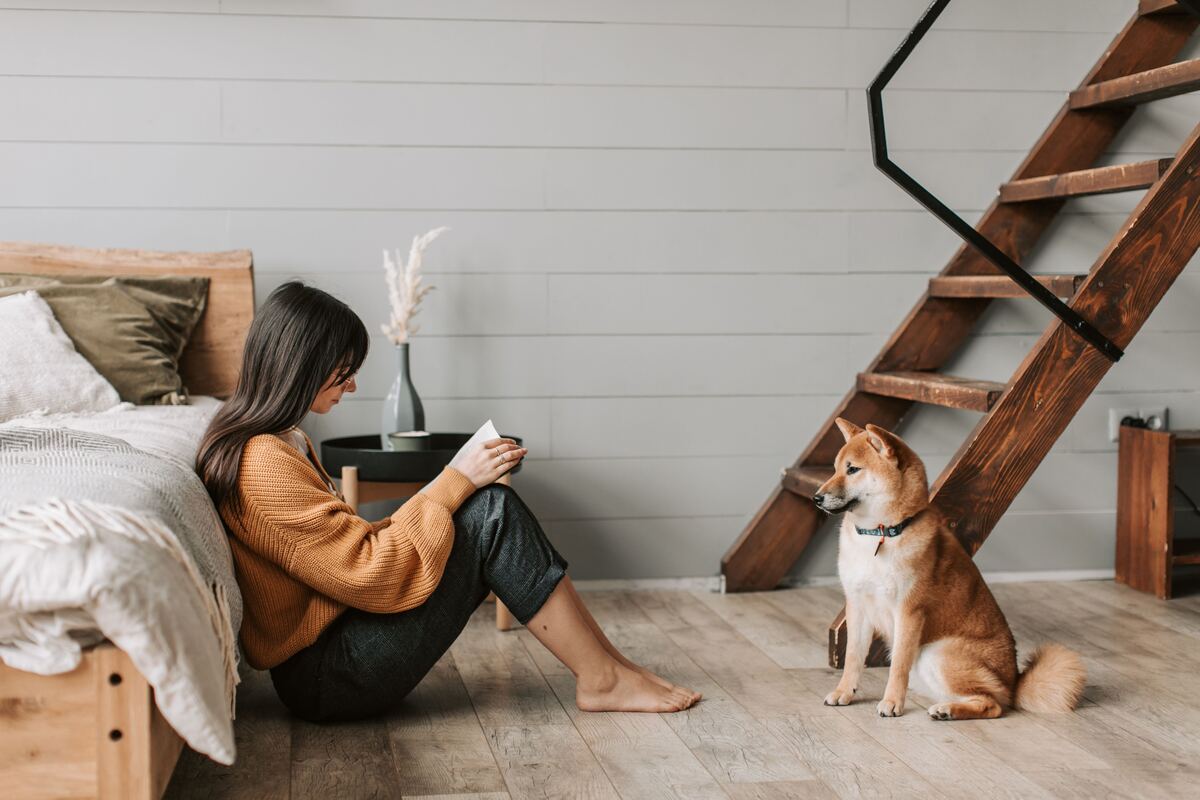
When people talk about the benefits of dog ownership, they usually lead with the obvious ones — companionship, structure, the mental health benefits of having something to take care of. All real. But what I wasn't warned about is the specific quality of growth that comes from being chosen, every day, by a creature who has no agenda in the choosing. Who doesn't love you because of what you provide or what you've built or how you perform on your best days. Who loves you on the days you haven't showered and you're annoyed at something that has nothing to do with them and you're not being your most gracious self.
That kind of love is both deeply comforting and quietly confronting. Because it holds up a mirror to every version of you — not just the curated one. And if you're paying attention, it becomes one of the more honest relationships you have access to.
What if your dog has been raising you all along?
The research on the human-animal bond is clear that dog ownership offers measurable mental health benefits — lower cortisol, reduced anxiety, improved emotional regulation, better cardiovascular health. What the studies don't fully capture is the subtler thing that happens over years of dog parenthood: you become, incrementally, the kind of person a dog has always assumed you were. More patient than you knew. More attuned than you gave yourself credit for. More capable of non-verbal empathy, of showing up for something fragile, of being present without agenda.
Dog therapy doesn't always happen in a clinical setting. Sometimes it happens on a kitchen floor at 2 a.m., or on a walk you didn't want to take, or in the specific quiet of sitting with an animal who doesn't need you to say anything at all. Mindful dog ownership — the kind where you're actually paying attention to what the relationship is doing to you — may be one of the most underrated paths to emotional intelligence that exists. Not because dogs are teachers in any formal sense. But because the love they offer requires you, gently and persistently, to rise to meet it.
That's the human-animal bond, working exactly as it was designed. And your dog has been doing it since the day you brought them home.