Let me start with the part most articles skip: for the first four or five days, you will probably feel worse.
Not slightly worse. Headachy, irritable, oddly tired, and thinking about crisps with a focus you'd like to redirect toward literally anything else. This is normal, it is short, and knowing it's coming is the single biggest predictor of whether you make it to the interesting part.
Because the interesting part is genuinely interesting. Somewhere around day ten to fourteen, your palate resets. Around week three, the way you feel between meals changes — the 3pm collapse simply stops arriving. And by the end of the month, most people report the same slightly surprised observation: I'm not thinking about food all the time anymore.
Here's what's actually happening in your body, week by week, and how to set the month up so you don't quit on day four.
First — What Actually Counts as Ultra-Processed?
This distinction matters more than almost anything else in this article, because getting it wrong turns eating well into an expensive, exhausting project that nobody sustains.
Processed food is not the problem. Freezing, canning, fermenting, milling, pasteurising — these are ancient, useful technologies that make food safer, cheaper, and available in February. Frozen peas are processed. Tinned tomatoes are processed. So are plain yoghurt, olive oil, wholemeal flour, and dried pasta. All excellent. Keep them.
Ultra-processed food is a different category. Under the NOVA classification used in most of the research, it refers to industrial formulations built largely from substances extracted from food — protein isolates, modified starches, refined oils, invert sugars — recombined with additives whose job is cosmetic or textural: emulsifiers, colours, flavour enhancers, non-sugar sweeteners, thickeners.
The practical test takes four seconds. Read the ingredients list and ask: could I find these things in a normal kitchen? If it contains modified maize starch, mono- and diglycerides of fatty acids, or "flavouring", you're holding an ultra-processed food. It's not a moral failure to eat one. It's just useful to know which category you're in.
The 30-Day Timeline: What Happens and When
Individual experience varies considerably — the more ultra-processed your starting point, the more dramatic the first week. But the general arc is remarkably consistent.
Ultra-processed foods are engineered to hit the brain's reward circuitry hard and fast — precise ratios of sugar, fat, salt and texture that don't occur in nature. Remove that reliable signal and you get a genuine, temporary dip: headaches, irritability, low energy, and cravings that feel disproportionate to the situation.
Whether this qualifies as "withdrawal" in the clinical sense is still debated among researchers. What isn't debated is that it's uncomfortable and that it passes. Plan for it. Don't start this on a week with a major deadline.
Swapping packaged food for whole food usually doubles or triples fibre intake overnight. Your microbiome hasn't been briefed. The result is often bloating, gas, and unpredictable digestion — which many people misread as a sign that whole foods "don't agree with them."
They do. The bacteria just need a fortnight to adjust. Increase fibre gradually rather than all at once, drink noticeably more water, and this phase is far milder.
This is the first genuinely rewarding milestone. Without refined carbohydrates driving sharp glucose spikes and the reactive dips that follow, energy flattens out into something steady. The afternoon slump you'd assumed was just a feature of being alive turns out to have been a blood sugar pattern.
Hunger becomes more legible too — a gradual signal rather than an emergency, because protein and fibre slow gastric emptying and steady the hormones that govern appetite.
Ultra-processed foods deliver what researchers call supranormal stimuli: concentrations of sweet and salt far beyond anything found in nature. Sustained exposure resets your reference point, so real food tastes flat.
Remove the extremes and the reference point drifts back. Around the two-week mark, fruit starts tasting startlingly sweet, roasted vegetables taste rich rather than plain — and, most tellingly, the snacks you used to love begin tasting distinctly chemical. Salt-reduction studies show measurable shifts in preferred concentration over eight to twelve weeks, with noticeable change much sooner.
Diets high in ultra-processed food are consistently associated with elevated inflammatory markers such as CRP and IL-6. Several mechanisms are likely at work at once: high sodium, refined oils, the near-absence of fibre and polyphenols, and emerging evidence that certain emulsifiers can disrupt the gut barrier.
Meaningful change in these markers typically needs three to four weeks or more — so this is where a 30-day window is a starting line rather than a finish. What people notice first tends to be subjective: less puffiness, joints that feel easier, mornings that don't require negotiation.
This is the finding I think about most. In a tightly controlled NIH inpatient trial, participants ate either ultra-processed or minimally processed meals — matched for calories, sugar, fat, fibre and sodium — and could eat as much as they wanted.
On the ultra-processed diet, people spontaneously ate around 500 more calories per day and gained roughly 0.9 kg in two weeks. On the minimally processed diet they lost about the same. Nobody was asked to restrict anything. The difference came from the food itself: how fast it can be eaten, how energy-dense it is, and what it does to satiety hormones.
The most useful thing about this month isn't the weight or the energy. It's discovering that the constant, low-grade preoccupation with food — the one you'd assumed was your personality — was largely a blood sugar pattern and a dopamine loop.

The Three Levers That Do the Most Work
You don't need a complicated protocol. Three shifts account for most of the benefit, and they work simultaneously on energy, inflammation, and appetite.
1. Front-load anti-inflammatory fats
Extra virgin olive oil, avocado, walnuts, oily fish (salmon, sardines, mackerel), flaxseed. The omega-3 fatty acids and polyphenols in these foods are among the most consistently supported dietary anti-inflammatories we have — olive oil's oleocanthal, for instance, acts on the same inflammatory pathway as ibuprofen, if far more gently.
They also do something immediately practical: fat slows gastric emptying, which flattens the glucose response of whatever you eat alongside it. Half an avocado on toast is a meaningfully different metabolic event from toast alone.
2. Trade fast carbohydrates for slow ones
Not no carbohydrates — slower ones. Oats instead of boxed cereal. Sweet potato or new potatoes instead of white bread. Lentils, chickpeas, black beans, quinoa, barley. The fibre and resistant starch mean glucose arrives gradually rather than all at once, which keeps insulin steady and — this is the part people feel — keeps cravings from being generated in the first place.
Most sugar cravings aren't a willpower problem. They're the predictable downstream consequence of a spike three hours earlier.
3. Build meals from single-ingredient foods
The simplest heuristic there is: assemble most meals from things that had one ingredient before you touched them. Eggs. Spinach. Chicken. Rice. Berries. Yoghurt. Olive oil.
This works partly because of what it adds — fibre, polyphenols, micronutrients that feed a healthier microbiome — and partly because of what it quietly removes. Emulsifiers, in particular, are under increasing scrutiny for their effects on the intestinal mucus layer and gut barrier integrity.
- Week 1 — Headaches, irritability, cravings, some bloating. The worst of it. It ends.
- Week 2 — Steadier energy, no afternoon crash, hunger becomes a gradual signal rather than an emergency.
- Week 3 — Taste fully recalibrated. Fruit tastes like dessert. Old snacks taste artificial.
- Week 4 — Less puffiness, clearer thinking, clothes fitting differently, and markedly less mental noise about food.
- Cook once, eat three times — Convenience is what drives most ultra-processed purchases. Beat it with batch cooking, not willpower.
- Never arrive home starving — Have a real snack available at 4pm. Decisions made while ravenous are not decisions.
- Aim for 80%, not 100% — Perfectionism is the leading cause of abandoning this by day nine.
- Keep going past day 30 — Inflammatory markers and habit formation both need longer than a month.
The Swap Guide: Start Here Tomorrow
This is the part that actually determines whether the month works. Swaps, not subtraction — because removing food without replacing it is how people end up ravenous and eating three of the thing they were avoiding.
| Instead of | Try | Why it works |
|---|---|---|
| Boxed cereal & oat drink | Overnight oats, yoghurt, berries, walnuts | Fibre + protein + fat = no 10am hunger |
| Flavoured yoghurt pot | Plain Greek yoghurt + fruit + honey | Same sweetness, a third of the sugar |
| Breakfast bar on the way out | Two boiled eggs + fruit (prep Sunday) | Equally portable, four times as satiating |
| Pastry & coffee | Sourdough, avocado, egg, chilli flakes | Slow carbs + fat flatten the glucose curve |
| Instead of | Try | Why it works |
|---|---|---|
| Meal-deal sandwich | Grain bowl: quinoa, roast veg, chickpeas, tahini | Batch on Sunday, eat for four days |
| Jarred pasta sauce | Tinned tomatoes, garlic, olive oil, basil | Six minutes, no emulsifiers or added sugar |
| Instant noodles | Rice noodles, miso, egg, greens, sesame oil | Roughly the same speed, actual nutrition |
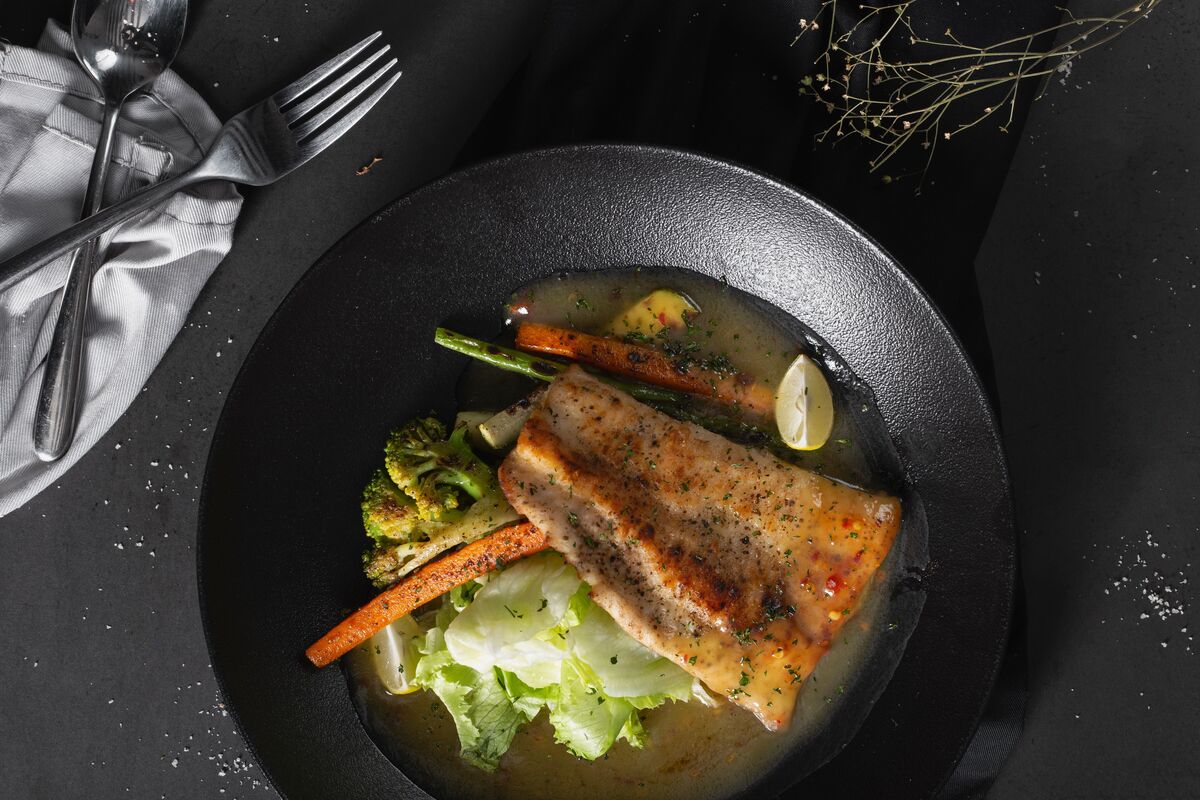
| Frozen ready meal | Sheet-pan salmon, potatoes & broccoli | One tray, 25 minutes, omega-3s included |
| Deli chicken slices | Roast a whole chicken Sunday | Cheaper per portion, no nitrates or fillers |
| Instead of | Try | Why it works |
|---|---|---|
| Crisps | Roasted salted almonds, or popcorn you popped | Satisfies crunch + salt, adds protein or fibre |
| Biscuits with tea | Dark chocolate (70%+) & a handful of nuts | Genuinely satisfying, far less sugar |
| Cereal bar | Apple + spoon of peanut butter (nuts only) | Fibre + fat + protein — the full trio |
| Fizzy drink or diet soda | Sparkling water, lemon, mint, frozen berries | Same ritual and fizz, no sweetener signal |
| Flavoured latte | Coffee + whole milk + real cinnamon | Removes 20–30g of hidden syrup sugar |
Setting the Month Up So You Don't Quit on Day Four
Do these before day one. They matter more than motivation.
- Pick a boring week to start. Not the week of a wedding, a deadline, or a holiday. The first five days need slack in them.
- Taper caffeine and sugar slightly beforehand. Two or three days of gentle reduction takes a lot of the edge off the initial crash.
- Do one real shop and one batch cook. Roast a tray of vegetables, cook a pot of grains, boil six eggs. The month is won or lost on what's within reach at 7pm.
- Add fibre gradually, and drink more water than feels necessary. This single adjustment prevents most of the week-one bloating people find so discouraging.
- Decide your non-negotiable in advance. If wine on Friday or chocolate after dinner stays, decide that now — consciously — rather than surrendering it on day twelve.
- Measure something other than weight. Energy at 3pm, sleep quality, how often food is on your mind. These shift earlier and matter more.
An Honest Word Before You Begin
Three things I'd want a friend to hear.
This is a class issue as much as a health one. Ultra-processed food is cheap, shelf-stable, requires no equipment and no time. Whole-food eating costs more of both. If your budget is tight, the highest-value swaps are dried legumes, oats, eggs, frozen vegetables, tinned fish, and potatoes — all inexpensive, all minimally processed. Reducing is worth doing even when eliminating isn't realistic.
Perfectionism will end this faster than any craving. Going from 60% of calories from ultra-processed food to 20% is an enormous change. Chasing zero — reading every label, refusing every social meal — usually collapses by week two and takes the whole effort with it. Aim for mostly.
If food is already a fraught subject, be careful with this one. Any protocol involving elimination and food rules can become a foothold for disordered eating. If you have a history of restriction, bingeing, or obsessive tracking, please approach this with a registered dietitian rather than alone — or skip it entirely and simply add whole foods without removing anything. Adding is always safe.
The point was never thirty days.
Thirty days is just long enough to get past the withdrawal, reset your palate, and feel what steady energy is like — so you have something real to compare against. What most people find at the end isn't discipline. It's that the food they used to reach for no longer tastes like much, and the food they'd been ignoring suddenly does. That's not willpower. That's a system quietly returning to its factory settings.