The switch to natural fragrance was not something I planned. It started the way a lot of quiet revolutions do — with a single unanswered question. I was cleaning out my vanity, and I picked up my perfume bottle and turned it over. The ingredient list was eight lines long. Most of it was unpronounceable. And somewhere in the middle was a single word — fragrance — listed as though it were one thing, when in practice it is not.
Under U.S. cosmetic labeling regulations, the word "fragrance" (or "parfum" on European products) can legally conceal an unlimited number of individual compounds. It is an umbrella term, not an ingredient — and it has been used that way for decades. Behind it can sit synthetic musks, phthalates, volatile organic compounds, and fixatives that the manufacturer is under no obligation to disclose. The fragrance industry's trade secret protections are older than most of the research into what these compounds actually do in the body.
I am not someone who catastrophizes. I did not throw the bottle away that evening. But I did start reading.
What the Research Says About Synthetic Fragrance
The science on synthetic fragrance has developed considerably in the past decade, and what it shows is worth knowing. A 2024 study that analyzed ten commercially available designer perfumes found that all ten demonstrated significantly inhibited aromatase activity — the enzyme responsible for converting testosterone to estrogen. Phthalates, synthetic musks, parabens, and UV filters were identified as the primary compounds responsible. The researchers concluded that all ten products met the established scientific criteria for endocrine disruptors.
Endocrine disruptors interfere with the hormonal signaling that governs everything from metabolism and mood to reproductive health and sleep. They don't announce themselves. They accumulate quietly over time, in tissue, in fat cells, in the body's slow chemistry. A single spray of perfume is not, in itself, a crisis. But we are not applying perfume once. We are applying it every day, to skin that absorbs what it touches, through lungs that inhale what we spray into the air around us.
The fragrance you've worn for years may have become part of who you are. The question is whether the ingredients in it were ever meant to.
The concern is compounded by what researchers call the cocktail effect — the cumulative exposure to multiple low-dose synthetic chemicals across all the products we use daily. Your perfume doesn't exist in isolation. It shares your skin with your moisturizer, your sunscreen, your body lotion. The combined load matters even when individual products fall within regulatory limits. This is not fringe information. It has been published in peer-reviewed toxicology journals and replicated across research groups. It is simply information the packaging was never designed to share with you. Beauty is full of these unexamined defaults — including the uncomfortable finding that wearing makeup measurably changes how you're paid.
What Natural Fragrance Actually Is
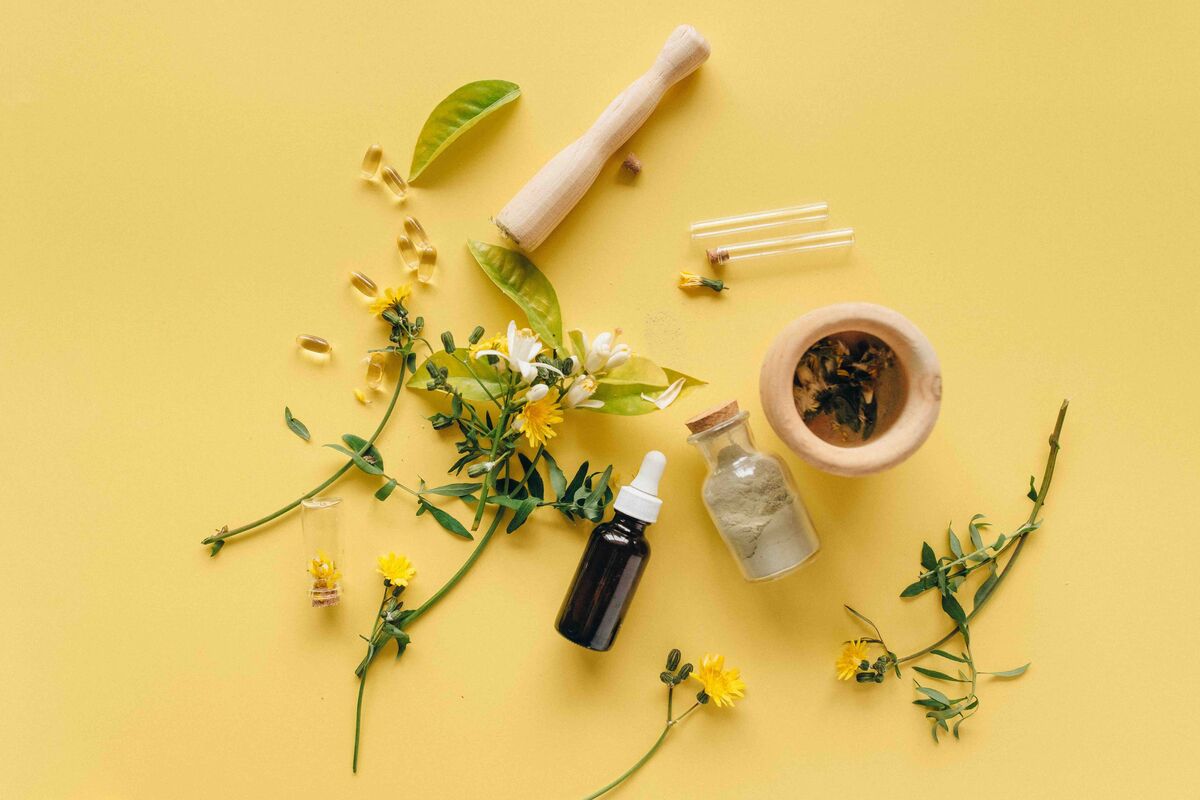
Natural perfume is made entirely from plant-derived ingredients: essential oils, absolutes, resins, and botanical extracts in a carrier of grain alcohol or a fixed oil. Every aromatic compound originates from a plant source — flowers, woods, roots, citrus peel, resins — extracted by steam distillation, cold pressing, or solvent extraction. There are no petrochemical compounds, no synthetic fixatives, and nothing the brand needs to conceal behind a catch-all term.
This sounds simple. In practice it is an act of significant formulation restraint. Working without synthetic stabilizers means the perfumer has to find longevity through botanical resins and balsams. Working without synthetic fixatives means the scent will evolve differently on skin, because it actually responds to skin — to your body heat, your pH, the unique microbiome that makes you you.
What surprised me most, when I first started wearing natural fragrance, was how alive it felt. My old synthetic perfume had a signature — it smelled like itself, on everyone, all day, until it faded and smelled like nothing. My first natural EDP opened differently in the morning than it settled in the afternoon. It was warmer close to the skin. It changed. It had something I can only describe as a personality.
The Science Behind Botanical Ingredients
Natural essential oils are composed of small, fat-soluble bioactive molecules that interact with the skin and, when inhaled, engage the nervous system directly. This is not metaphor — it is biochemistry. Scent molecules travel from the olfactory nerves to the brain, impacting the amygdala, the emotional center responsible for memory, mood, and the regulation of stress response. This dual absorption pathway — through skin and through inhalation simultaneously — means that what is in your fragrance reaches you more thoroughly than the word "fragrance" on a label suggests.
The therapeutic evidence for specific essential oils is substantial and peer-reviewed. A 2023 systematic review of eleven clinical trials found that lavender essential oil inhalation produced significantly decreased anxiety levels in ten of eleven studies across nearly a thousand participants. Bergamot has been shown in randomized crossover trials to measurably reduce salivary cortisol — a direct physiological marker of stress. These are not wellness claims. They are replicable clinical findings, attributable to specific molecular mechanisms in identifiable plant compounds.
Synthetic aroma molecules, designed for olfactory stability rather than biological activity, do not carry these effects. A synthetic rose accord smells like roses. A rose absolute behaves like something that grew from the ground.
The Longevity Question — and Why I Stopped Caring About It
The most common objection to natural perfume is longevity — and it is a fair one, up to a point. Synthetic fixatives and musks are engineered specifically to project a stable note for as long as possible, because that is what gets compliments from across a room. Natural perfume does not do that. It has a different relationship with presence.
What I found, after wearing natural fragrance for several months, was that longevity was not actually what I had valued in my old perfume. What I had valued was familiarity — the anchoring feeling of smelling like myself. Natural fragrance gives you that, more intimately. It sits closer to the skin. It lasts, on average, four to six hours on a clean application; longer on moisturized skin, and considerably longer in the drydown, where botanical resins come forward with something richer and quieter than the projection of the top notes.
You stop spraying to announce yourself. You start applying something that has a relationship with your body. That is a different thing entirely, and once you notice the difference, the projection question starts to feel like the wrong one to have been asking.
How to Make the Switch to Clean Fragrance
The natural fragrance market has grown significantly enough that there are now genuine options at multiple price points — from accessible clean beauty brands reformulating around botanical ingredients to niche perfumers working entirely from plant sources. The quality varies enormously, which makes starting with samples the single most practical piece of advice I can offer.
When evaluating a natural fragrance, look for ingredient transparency as the first signal. A brand genuinely committed to botanical formulation should be able to list every ingredient by name — botanical name for essential oils, origin for resins and absolutes — rather than sheltering behind "fragrance" or "natural fragrance blend." The words all-natural and clean are marketing terms with no regulatory definition. Ingredient transparency is the only thing with substance.
Second, look at the carrier. Natural perfumes formulated in grain alcohol or jojoba oil behave differently from those using synthetic solvents. Water in the formula almost always means synthetic preservatives are required — another compound the label may not fully disclose.
Third — and this is the part nobody says because it sounds inconvenient — give it time. Your nose has been trained on synthetic fragrance. The first week of wearing natural perfume can feel quiet, even understated, because your olfactory system is calibrated to the projection of synthetic molecules. Within two to three weeks, most people find their perception shifts. The natural fragrance starts to smell full rather than soft. The complexity becomes audible. What seemed subtle reveals itself as layered.
I think of it the way I think of switching from processed food to whole ingredients — the first few days feel like something is missing. Then your palate recalibrates, and you realize what was missing was nuance all along.
What if the most intimate thing you wear deserves the same scrutiny as what you eat?
You read ingredient labels on food. You have opinions about what goes on your skin. Fragrance has been the one exception — the place where mystery was sold as luxury and opacity was mistaken for sophistication. But scent is not separate from your body. It is absorbed by it, inhaled into it, carried through a day that is already asking a lot of your nervous system. Switching to natural fragrance is not a sacrifice. It is a recalibration — and on the other side of it, you might find that what you were wearing all along had very little to do with who you actually smell like.
Your beauty shelf
Stock up on the good stuff.
eCosmetics carries prestige makeup, skincare and fragrance — often well below department-store prices, so your ritual costs a little less. Affiliate link — I may earn a commission, at no cost to you.
Shop Cosmetics