It was a form at the bank — one of those things they still insist on doing with a biro chained to the counter. Name, date, signature.
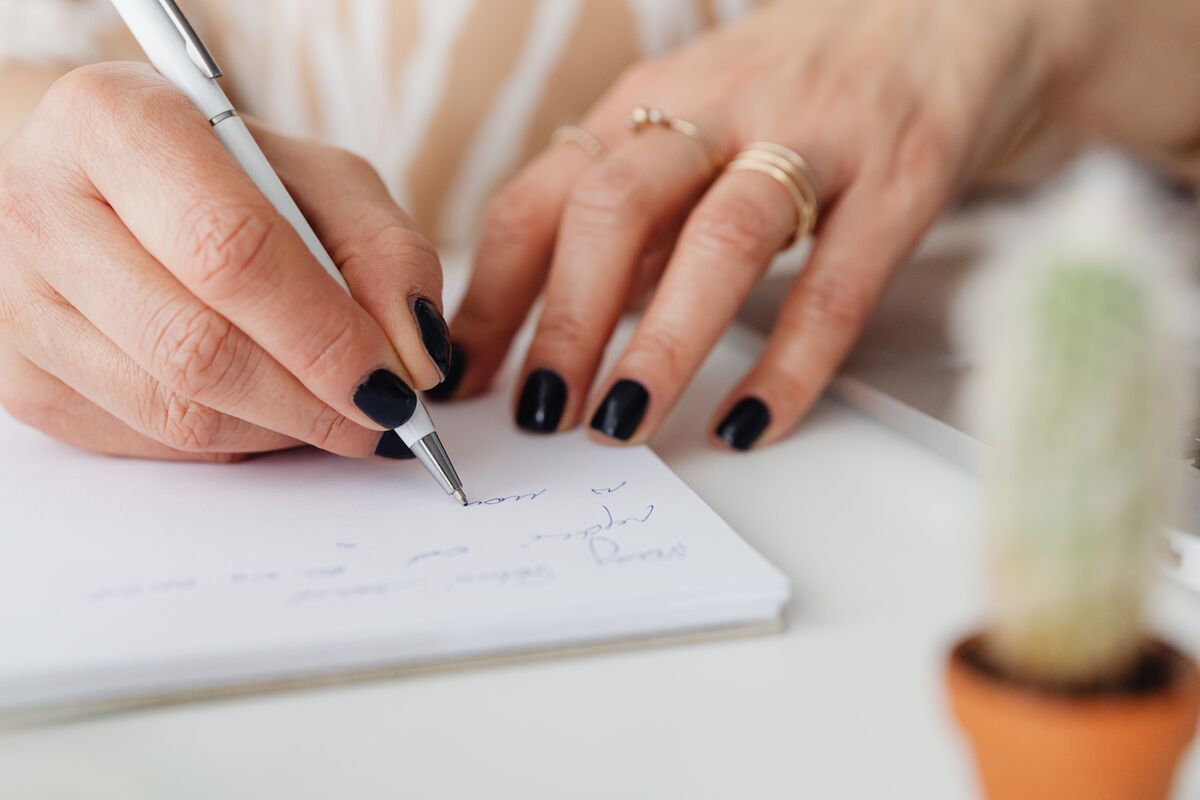
And the writing that came out wasn't mine. It was cramped and unsure and slightly wrong, the way a word looks when you've stared at it too long. I remember thinking: I don't know how to do this anymore.
Which is absurd, obviously. I write all day. I'd written thousands of words that week. But I hadn't made a letter with my hand in months, possibly longer, and the skill had quietly gone soft the way skills do when you stop using them.
I bought a notebook on the way home. Not a nice one — a spiral thing from the pharmacy. And what started as mild embarrassment turned into the most useful change I've made to how I work and think in years.
The Problem Wasn't Nostalgia
I want to be clear that this isn't a piece about how things were better before. I'm typing this. I have no interest in a candlelit life of quills and correspondence.
The actual problem was more specific, and I noticed it once I started paying attention: I could produce enormous quantities of text I hadn't really thought about.
Notes from a call I couldn't remember taking. Lists so long they'd stopped being lists. Documents that looked like thinking and were actually just typing — fast, fluent transcription with nobody home.
Because I type at speed. Most of us type between forty and eighty words a minute, and that's fast enough to keep up with speech, which means you can capture everything without deciding what any of it means.
Handwriting is about twenty words a minute. You physically cannot keep up. So you have to choose.
The slowness isn't the price you pay for writing by hand. The slowness is the entire product.
What the Research Actually Says
There's a well-known study here and I want to represent it honestly, including the part that usually gets left out.
In 2014, Mueller and Oppenheimer published a paper often cited as The Pen Is Mightier Than the Keyboard. Students took lecture notes either by hand or on laptops. The laptop users recorded more words. The handwriters performed better on conceptual questions afterwards. The proposed explanation was exactly the constraint above — being unable to transcribe forces you to summarise, and summarising is understanding.
The honest caveat: a large replication published in 2021 found much weaker effects. So this is suggestive rather than settled, and anyone telling you handwriting is definitively better for memory is overstating it.
What's held up better is the neuroscience. Researchers at the Norwegian University of Science and Technology have run several EEG studies comparing handwriting to typing, and they consistently find more widespread patterns of brain connectivity when people write by hand — particularly in regions associated with memory formation. Forming each letter is a complex motor act; pressing a key is the same motion twenty-six different ways.
That's a plausible mechanism for something I'd already noticed anecdotally: I remember what I write by hand. I don't remember what I type. I never needed a study to tell me that, but it was reassuring that one existed.
The Five Things I Moved Back to Paper
I didn't overhaul anything. I moved five specific tasks off the screen and left everything else where it was.
The list
Groceries, the day's three things, what to pack. This is the easiest possible starting point and I'd begin here if I were you.
A paper list has one enormous advantage over every app I've tried: it cannot notify me, and it cannot become something else. Opening the notes app to add "milk" has, on more occasions than I'd like, resulted in twenty minutes of email. A piece of paper on the counter stays a piece of paper.
Thinking a problem through
Anything genuinely difficult — a decision, a structure, a conversation I'm dreading — now happens on paper first.
Paper lets you be non-linear in a way documents resist. Arrows. Boxes. A thing scribbled in the margin that turns out to be the actual answer. A document wants to be tidy before it's finished, and tidiness at that stage is the enemy of working something out.
Letters and cards
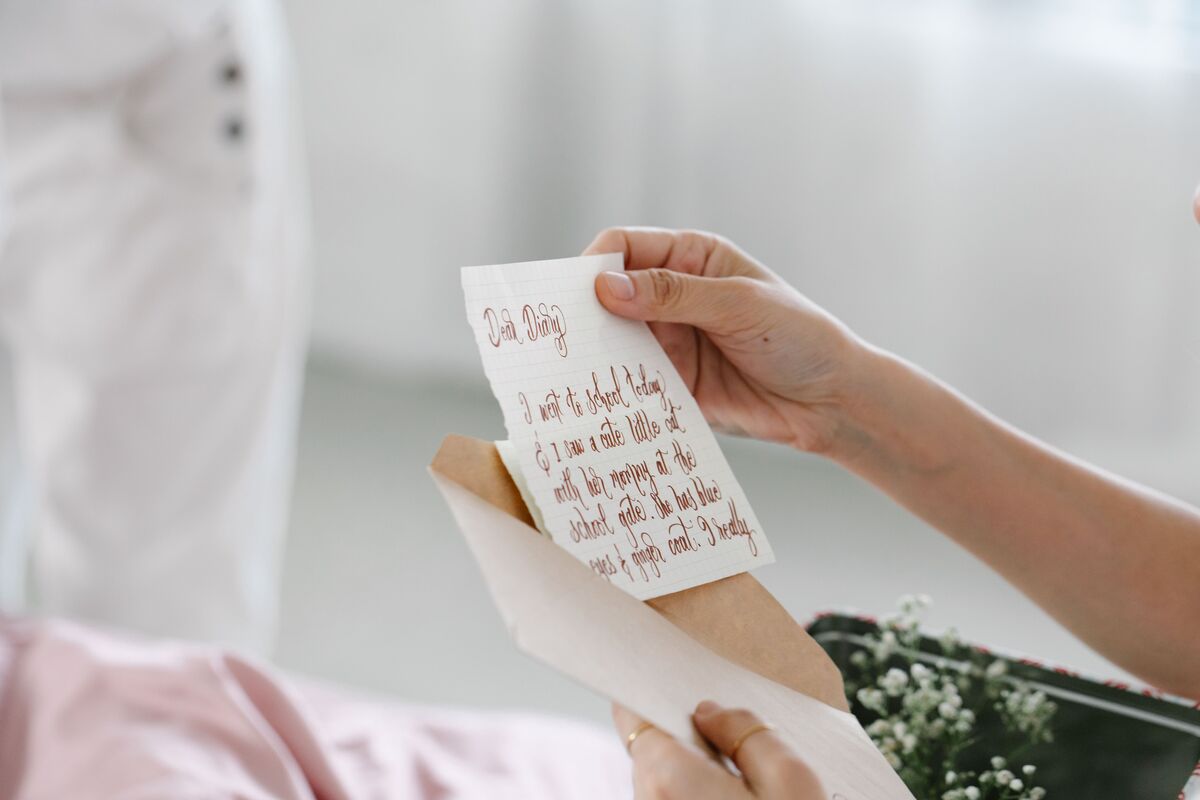
Not many. Perhaps two a month. But a handwritten card is now the only thing I send that anyone keeps.
The whole value is the inefficiency. Anyone can send a message in nine seconds; that's precisely why messages carry so little weight. Something handwritten, stamped and posted took twenty minutes and a trip. The effort is the content.
Reading with a pencil
Underlining, arguing in the margin, writing a couple of words on the last page about what the book actually did.
I used to read passively and retain almost nothing. A pencil turns reading into a conversation — and returning to a book years later to find your own handwriting disagreeing with the author is one of the genuinely lovely small experiences available in life.
One line at the end of the day
Not journaling. One sentence about what actually happened — often extremely boring. Rained all day. Finished the blue chair. Slept badly.
The bar is deliberately on the floor, because that's what makes it survive a bad week. Reading back over a month of these is unexpectedly moving, and it takes about eleven seconds a night. If you want the fuller version of this, that's morning pages — a different practice entirely, and a bigger commitment.
Your handwriting is the only thing you produce that looks like you. Everything else you make comes out in a typeface chosen by somebody else, identical to everyone else's — which is fine, and efficient, and also why a shopping list in your grandmother's hand can undo you completely.
What This Looks Like in the House
The practical part, and the reason this ended up being about my home as much as my head.
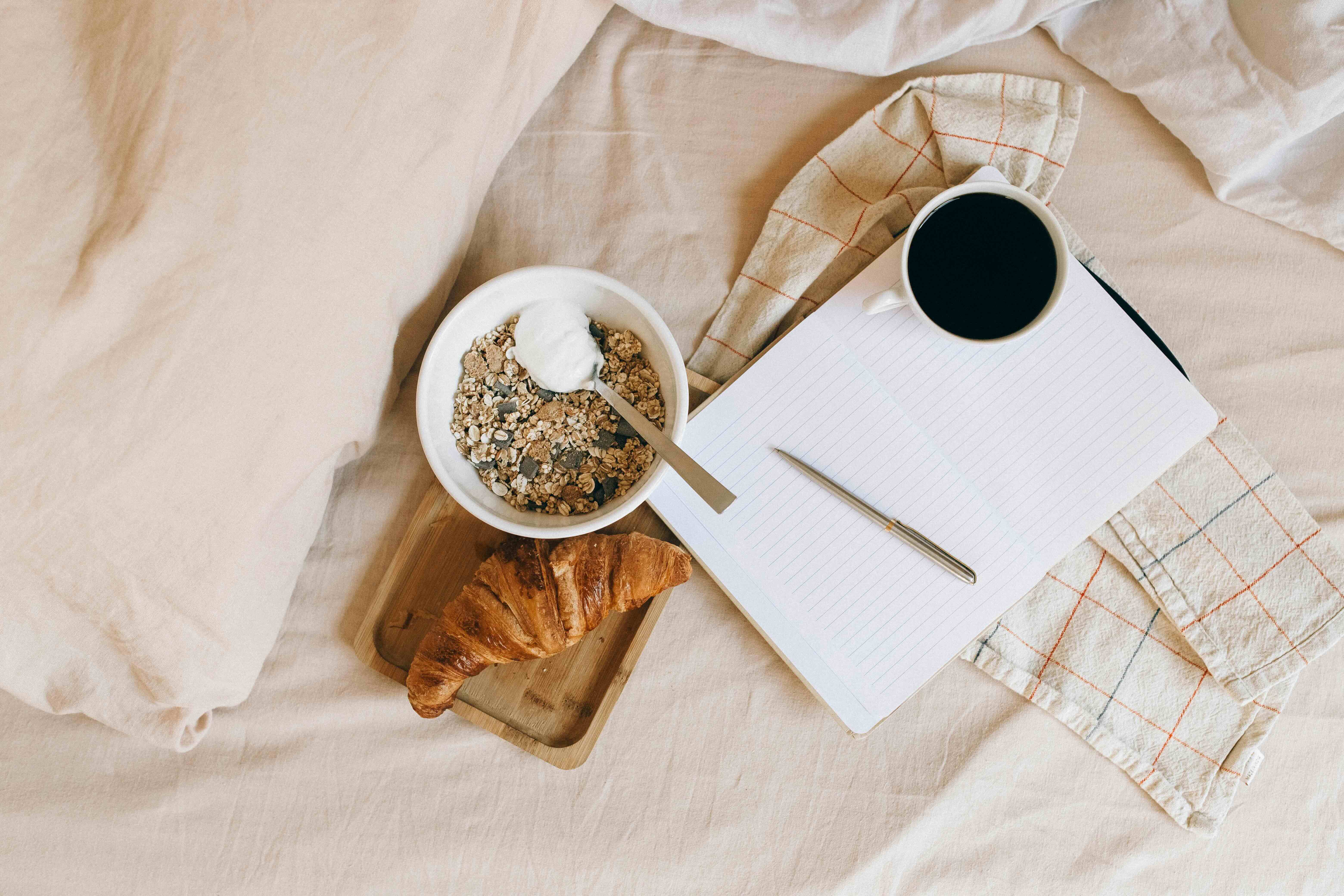
The habit lives or dies on friction. Twenty seconds of hunting for a working pen is enough to make you open your phone instead — every time, no exceptions. So the notebook doesn't live in a drawer. It lives on the table by the window, closed, with a pen on top of it, where I can see it.
That's it. That's the system. A notebook that's visible and a pen that works.
I'd also say this gently, because the stationery industry would love you to believe otherwise: an expensive notebook is a liability. A beautiful £40 journal creates the sense that what goes in it should be worthy, and the first thing you write will feel insufficient, and then it sits there being lovely and empty. Cheap paper you're willing to ruin is the correct choice.
- The notebook is in a drawer — Out of sight is out of use. Twenty seconds of friction loses to a phone every time.
- The pen is bad — You'll notice you're avoiding it and conclude you don't like writing. You just don't like that pen.
- You bought something too nice — A beautiful journal demands worthy contents. Nothing feels worthy. It stays empty.
- You committed to too much — Daily long-form journaling is a real undertaking. Most people quit inside two weeks.
- It's visible — On a table, closed, pen on top. The whole system, and genuinely all of it.
- It's cheap enough to waste — Paper you'll happily ruin is paper you'll actually use.
- Start with the list — The lowest-stakes analogue task there is, and the one you already do daily.
- One line counts — A sentence is a complete entry. There's no minimum for this to be working.
The Part I Didn't Expect
My grandmother kept a box. Not of anything valuable — receipts, a few letters, some recipe cards, a list of what she'd planted one spring in the sixties.
I have it now, and I can tell you exactly what her handwriting looked like when she was hurrying and what it looked like when she wasn't. There's a card where she started to write something and crossed it out, and I've spent an unreasonable amount of time trying to work out what it said.
Almost nothing I have made in the last fifteen years will exist in that way. It's on drives, in accounts, in formats, behind passwords — and it is all in Helvetica. Someone might read my words. Nobody will ever see my hand.
I'm not suggesting anyone take up handwriting as an act of legacy planning; that would be a strange reason to buy a notebook. But it did shift something in how I think about the small paper objects accumulating in the drawer. They're the only part of this that survives as evidence a specific person was here.
And in a house that is otherwise full of screens showing everybody's everything, there's something steadying about one closed notebook on a table that contains only what I put in it.
In order. The first two are the only ones that really matter.
- Buy a cheap notebook and one pen you like the feel of. Test the pen in the shop. This is the only equipment decision, and the pen matters more than the paper.
- Put it somewhere you'll see it. Kitchen table, desk, beside the kettle. Closed, pen on top. Not in a drawer, not in a bag.
- Start with tomorrow's list. That's all. Do the thing you'd have done in an app, on paper, once.
- Add one line at night. A single sentence about the day. Boring is correct.
- Take a pencil to whatever you're reading. Underline anything, argue in a margin. It converts reading from consuming into thinking.
- Send one card this month. To someone who won't expect it. Watch what it does — it's disproportionate to the effort involved.
- Keep typing everything else. This isn't a purity project. I'm writing this on a laptop. The point is having both, and knowing which is for what.
It's slower. That's what it's for.
Almost everything else in your day has been engineered to remove friction — fewer taps, faster loads, less waiting. Writing by hand is the one place where the inefficiency is the point: too slow to keep up with your own thoughts, which means you have to decide what's worth keeping. Start with a shopping list. Leave the notebook where you can see it. And if your handwriting has gone strange from disuse, it comes back within about a week, which is its own small reassurance about the things we assume we've lost.