Here's a fun (and slightly annoying) thing to know before you spend another cent on a serum: your body cannot build a single strand of collagen without a specific vitamin, and that vitamin isn't in the jar. It's in a bell pepper.
I spend a lot of my time explaining to clients that the beauty industry sells finished results — glow, bounce, strength — while quietly skipping the boring part where your body actually manufactures those things. It doesn't manufacture them from a cream. It manufactures them from what you ate three days ago. So let's do this properly: a grocery list, organized by what your body is actually trying to build, with the real research behind why each thing works. Some of it is going to surprise you.
Skin That's Built, Not Borrowed
Collagen is a protein, and like every protein in your body, it has to be assembled — your cells don't just have it lying around. The catch is that the enzymes responsible for stitching collagen strands together can't function without vitamin C as a cofactor. No vitamin C, no functional collagen, no matter how much collagen powder is sitting in your pantry.
Pair that vitamin C with the amino acids that actually become collagen — found in eggs, beef, and pumpkin seeds — and you've covered both halves of the equation: the raw material and the tool that assembles it. Grapefruit and tomatoes round out the vitamin C side nicely, and tomatoes bring a second party trick: their lycopene content actually becomes more absorbable once cooked, which is the rare case where the canned version beats the fresh one.
Your Gut Microbiome Is Having a Party (Or Not)
If skin is about building materials, your gut is about who's actually living in there — and this is where the research gets genuinely exciting.
In 2021, researchers at Stanford Medicine ran a controlled trial that split adults into two groups for ten weeks: one ate more fiber, the other added fermented foods like kefir and raw sauerkraut to their diet. The fermented-food group came out with measurably more diverse gut bacteria — and their blood tests showed lower levels of 19 separate inflammatory markers.
Round this out with oats, lentils, and beans for the fiber those new bacteria need to thrive, and you've got a gut that's doing far more than digestion — a healthy microbiome is increasingly linked to skin clarity, mood, and immune resilience, which is a lot of return on a jar of sauerkraut.
The Slow-Aging, Hormone-Steady Pantry
This next one might be my favorite fact in the entire piece, because it involves prunes and I understand that's not a glamorous sentence.
A 12-month clinical trial at Pennsylvania State University found that postmenopausal women who ate just 50 grams of prunes a day — about five or six of them — maintained their hip bone density over the full year, while women who skipped the prunes continued to lose bone. A researcher at Florida State University who has tested numerous fruits for bone benefits over her career put it plainly: nothing else came close to what dried plums did.
Five prunes a day preserved a full year of hip bone density in a real clinical trial. Nobody puts that on a wellness influencer's grid, and yet it's one of the best-supported claims in this entire article.
Flaxseeds, walnuts, and almonds bring the omega fats your body uses to build hormone-signaling molecules, while pumpkin and pumpkin seeds supply zinc, a mineral your body leans on heavily for reproductive hormone production. Organic tofu adds phytoestrogens, plant compounds that tend to have a gently balancing effect on estrogen activity for most people. None of this replaces medical care if something's actually off — but as a daily foundation, it gives your hormones the raw materials to do their own regulating.
Hydration Is Not Just What's in Your Glass
Quick myth to retire: hydration isn't only a water-bottle problem. Cucumber, celery, and zucchini are roughly 95% water by weight, and pineapple, pears, raspberries, and cantaloupe aren't far behind — plus they arrive with potassium and fiber that actually help your body hold onto that water rather than flush it straight through. A salad can genuinely out-hydrate a glass of water, which is not a sentence I expected to be writing either.
The Berries That Bought Two and a Half Years
Here's the fact I bring up at every dinner party whether anyone asked or not.
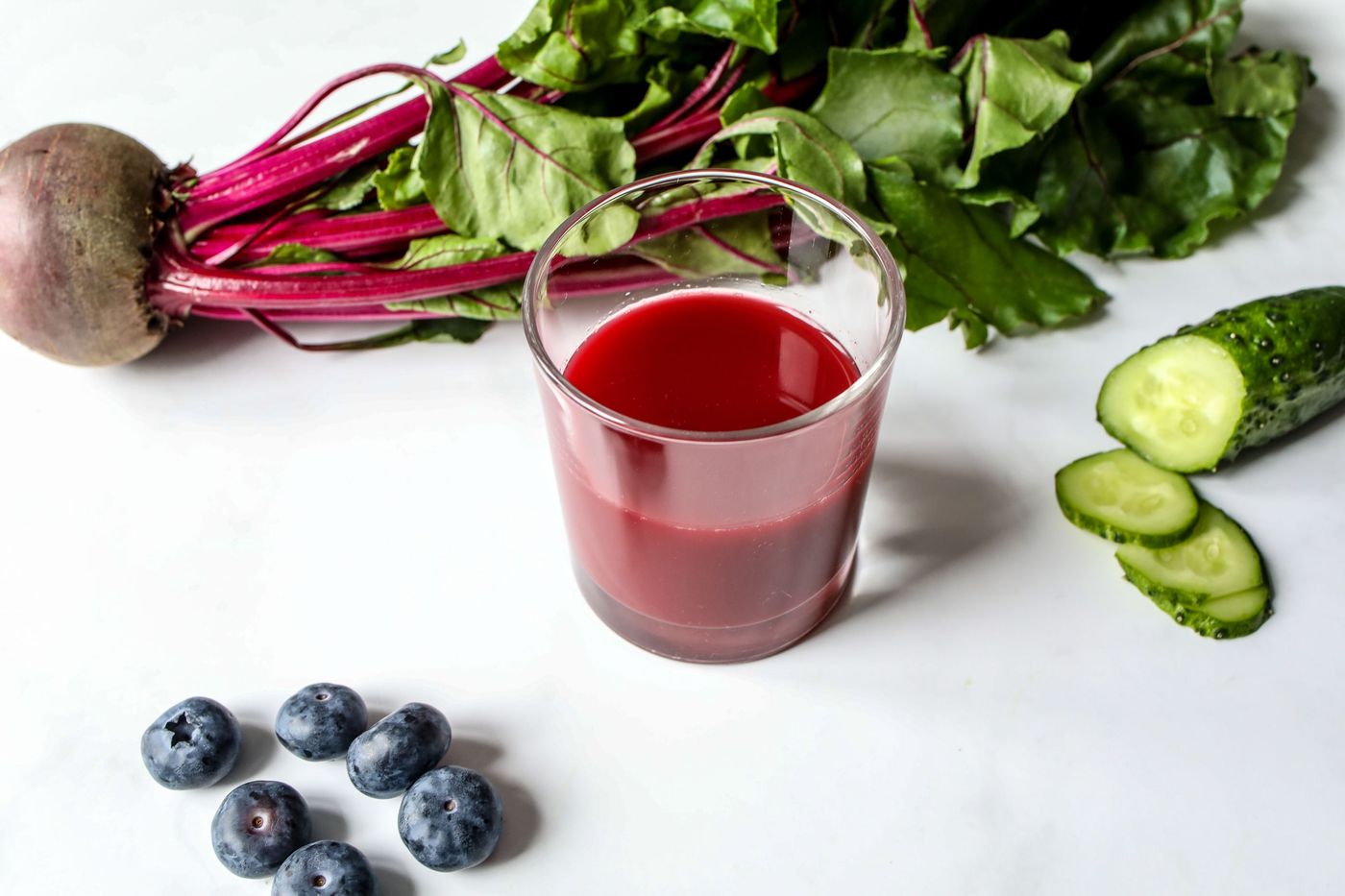
Harvard researchers, working through the long-running Nurses' Health Study, tracked memory and cognitive function in more than 16,000 women over age 70. The women who ate the most blueberries and strawberries showed a significantly slower rate of memory decline — the effect was large enough that researchers described it as delaying cognitive aging by up to two and a half years, compared with women who ate the least. The likely mechanism is a flavonoid called anthocyanidin, which is small enough to cross the blood-brain barrier and act directly in the regions responsible for memory.
Sardines, wild tuna, and beets round out the heart-and-brain category — the omega-3s in fatty fish support the fatty membranes your brain cells are literally made of, while beets contain natural nitrates that relax and widen blood vessels, improving blood flow to both your heart and your brain. Peanuts add a steady source of heart-friendly monounsaturated fat to the mix.
A bowl of blueberries is not a trend. In a study that followed over sixteen thousand women for years, it was measurably associated with a slower-aging brain — which is a stranger and better fact than almost anything on the supplement aisle.
Energy That Doesn't Crash by 3pm
Brown rice, legumes, corn, and lean chicken pair complex carbohydrates with protein — a combination that releases glucose into your bloodstream slowly and steadily, rather than in the spike-and-crash pattern that refined carbs alone tend to produce. Dates are a genuinely useful pre-workout food for exactly this reason: natural sugars for quick fuel, plus potassium and fiber to soften the landing.
The Category Everyone Forgets to Feed
Hair and nails are, biologically speaking, the last in line. Your body prioritizes vital organs first and gets to keratin production whenever there's surplus left over — which means chronically low intake shows up here before almost anywhere else, sometimes months later.
- Protein & zinc — from shrimp and chickpeas, the direct building blocks and cofactors for keratin production.
- Iron & B-vitamins — from kale and mushrooms, supporting the blood supply that feeds hair follicles.
- Selenium — from Brazil nuts, one of the most concentrated food sources on the planet.
- Just one Brazil nut can provide a meaningful share of your entire day's selenium needs.
- More isn't better here — selenium is one of the few nutrients where megadosing can backfire, so a small daily handful is the actual goal.
- Consistency beats intensity — hair and nails grow slowly, so results from any of this show up in months, not days.
How to Actually Use All of This
You don't need to eat everything on this list in one sitting, and please don't try. The nutritionist trick is simpler than it looks.
If your cart has this much color in it, you've probably covered most of the categories above without trying to.
- One fermented food, daily. Kefir in your smoothie, a spoon of sauerkraut on the side — this is the highest-leverage single addition, per the Stanford research above.
- One vitamin-C food with your protein. Bell peppers or tomatoes alongside eggs or beef gives your body both halves of the collagen equation in the same meal.
- A small handful of nuts or seeds, most days. Walnuts, flax, pumpkin seeds, or a single Brazil nut — this covers a surprising amount of the hormone and hair-strength categories at once.
- Something blue or purple, weekly at minimum. Blueberries or beets, for the brain-and-heart research above.
- Don't chase perfection — chase repetition. The prune study worked because women ate five prunes daily for a year, not because they ate a perfect plate once.
Your grocery cart is doing more for your glow than your medicine cabinet.
None of this requires perfection, a specific diet philosophy, or giving anything up. It just requires knowing that the vitamin C in a bell pepper, the bacteria in a spoonful of sauerkraut, and the flavonoids in a handful of blueberries are doing real, measurable, published-in-real-journals work — quietly, every single day, whether or not you're paying attention.