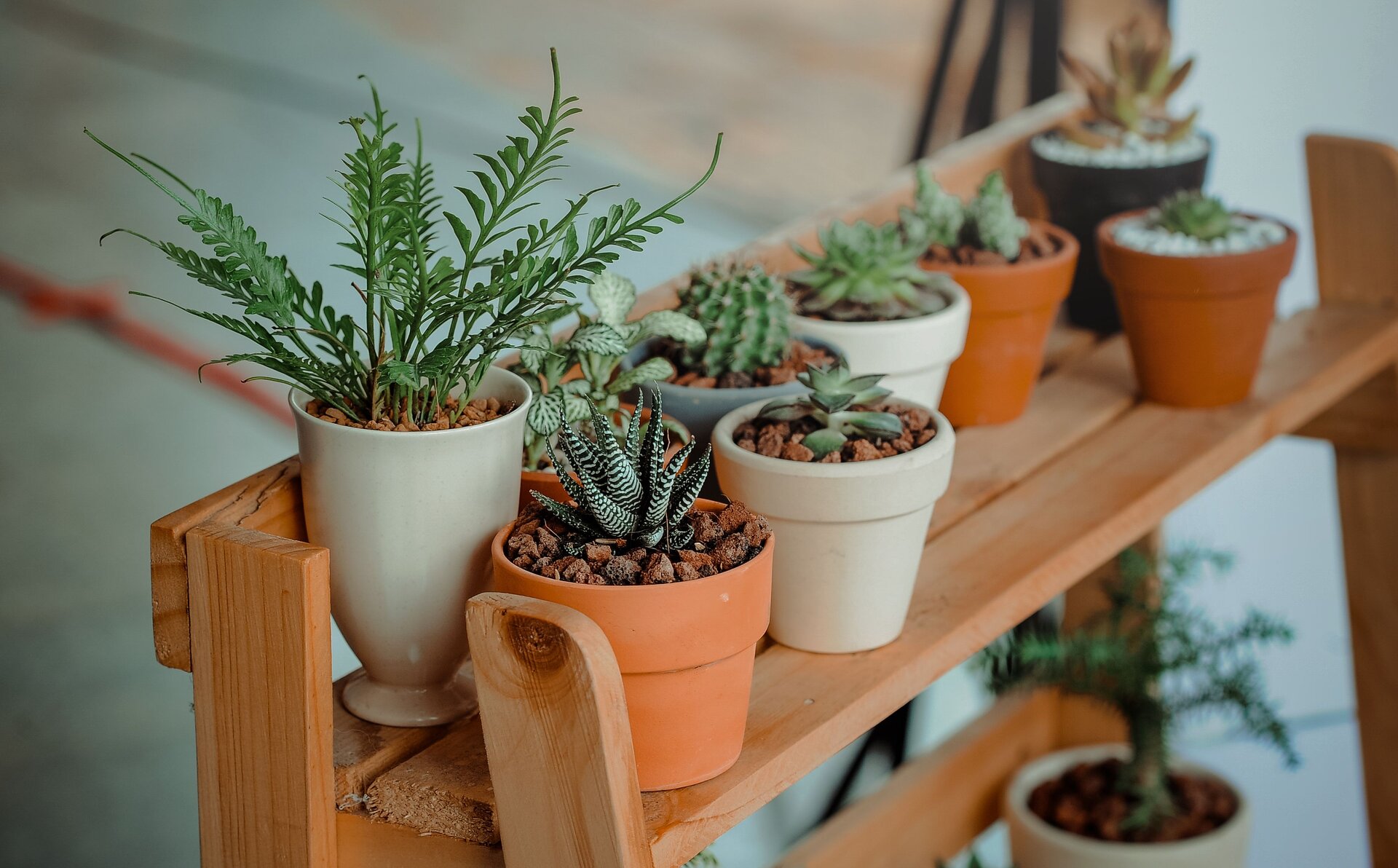
There's a corner of my living room I always seem to drift toward when something unsettles me. It's nothing designed — just a cluster of plants that collected there over a few years, a Pothos trailing off a shelf, a Snake Plant I almost killed twice before it decided to forgive me. I used to think I was going there because the light was good. It took me longer than it should have to realize the light I was going for wasn't coming through the window. It was coming from something the plants were doing to my nervous system that I hadn't named yet.
I started researching it the way I research most things — by following the feeling backward to the science. What I found changed how I think about the space I live in. Not as a backdrop to my life, but as an active participant in it.
The Ancient Wiring You Forgot You Had
Biophilic design is the architectural and psychological principle that humans have an innate, evolutionary need to connect with natural environments. The word comes from "biophilia" — literally, love of life — and the research supporting it is not soft or speculative. It draws on decades of studies in environmental psychology, neuroscience, and horticultural therapy, and the core finding is consistent: proximity to living plants and natural elements measurably alters how our bodies respond to stress.
This makes evolutionary sense when you sit with it. For the vast majority of human history, greenery meant safety. It meant water nearby, food, shelter, the absence of open threat. Our nervous systems were shaped in that world, not this one. The rigid geometry of modern interiors — hard angles, flat surfaces, uniform textures, the flat blue glow of screens — is, in biological terms, a very recent experiment. Our brains are still running the original software.
What biophilic research suggests is that living plants aren't a nice addition to a space. For your nervous system, they might be a requirement.
You might also want to read
What's Actually Happening in Your Body
The effects aren't vague or anecdotal — there are specific, measurable mechanisms at work. Researchers have identified three primary ways that plants interact with the human nervous system, and understanding them makes it harder to see a plant as merely decorative.
Multiple studies, including foundational work by environmental psychologist Roger Ulrich, have found that viewing natural elements — even photographs of nature — measurably lowers cortisol, the body's primary stress hormone. With living plants present in a room, this effect is stronger and faster: cortisol levels and blood pressure begin to drop within minutes of visual contact. The HPA axis — the system that governs your stress response — appears to interpret the presence of greenery as a signal that the environment is safe. It downregulates accordingly. You don't decide this happens. Your body does it automatically, before conscious thought.
Here's something that took me a long time to understand: not all visual input is equal for the brain. Directed attention — the kind required by screens, text, traffic, and most modern environments — depletes the prefrontal cortex and eventually contributes to the mental exhaustion we often mislabel as laziness or low motivation. Plants offer something different: what attention researchers call involuntary attention, or soft fascination. The fractal patterns in leaves, the irregular edges of a frond, the way light moves through a translucent stem — these engage the brain gently, without demand. Stephen Kaplan's Attention Restoration Theory describes this as the nervous system's version of resting without switching off. Your eyes are still busy, but the part of your brain that's been carrying the load all day gets to set it down.
Plants respond to care. That sounds obvious, but the neurological implication is significant. When you water a plant and watch a new leaf unfurl a week later, your brain registers that as a completed feedback loop — you gave something, and something visible came back. Horticultural therapy research documents this consistently: tending to living things activates the brain's anticipatory reward circuitry, the same dopamine pathways involved in any goal-directed behavior that yields visible progress. In a world where so much of our effort disappears into abstract digital systems, a plant growing on your windowsill is one of the few places you can still watch your care becoming something real.
"Your nervous system isn't responding to how your home looks. It's responding to what your home signals — whether it's safe, whether it's alive, whether there's something in it worth caring for."
Why It Has to Be a Real Plant
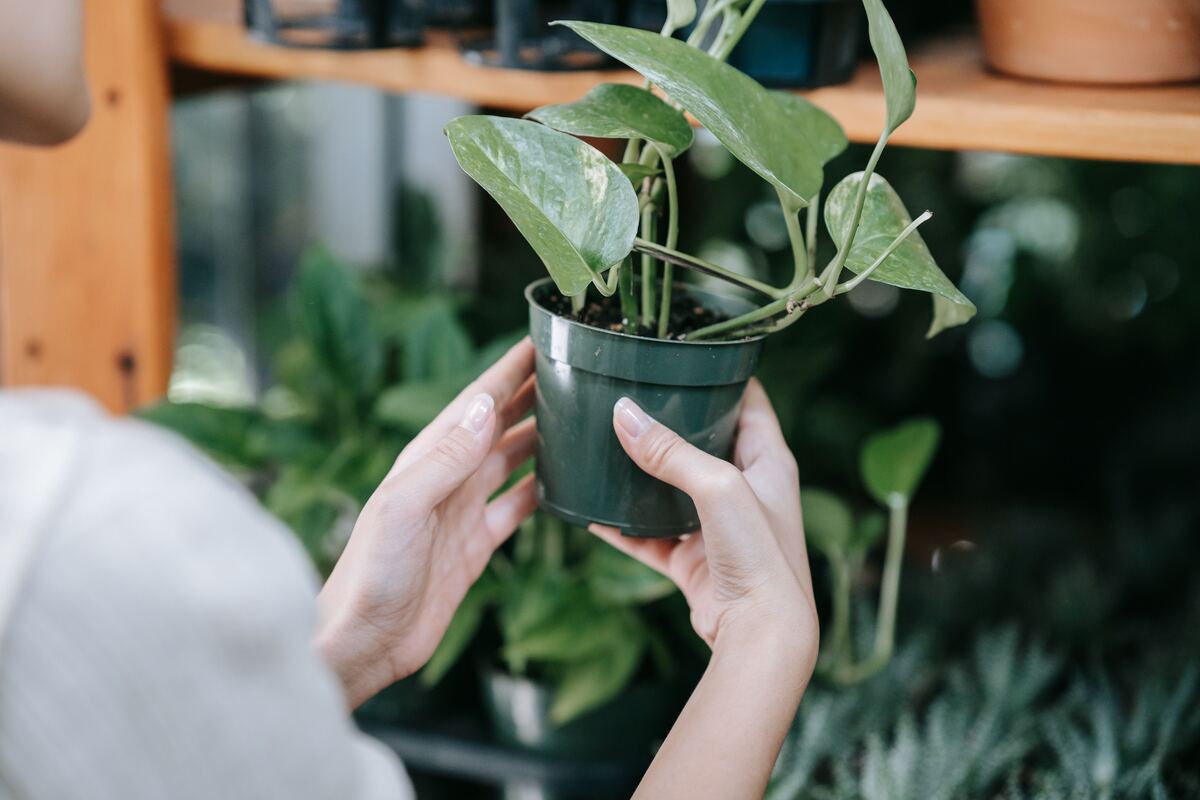
I want to spend a moment here, because I know the first thought is often: what about a really good fake? I asked the same thing. The honest answer, based on the research, is that artificial plants produce a notably weaker physiological response than living ones — and in some studies, no measurable nervous system effect at all.
The current thinking on why involves several channels happening simultaneously. Living plants release trace volatile organic compounds as they photosynthesize and transpire; they alter the humidity in a room in small but detectable ways; their soil contains microbial communities that interact with the air around them. There's also growing interest in the role of the unconscious nervous system: some researchers hypothesize that the brain, at a level below conscious perception, registers the difference between something living and something inert. A silk Monstera is a picture of a Monstera. A living one is a signal.
None of this means your home can't also be beautiful with faux greenery mixed in. It means that for the nervous system benefits you're looking for, the living plant is doing the work. The fake one is just along for the aesthetic.
Where to Actually Begin
The most common thing I hear from people who want plants but don't have them is some version of: I always kill them. Usually what this means is that they've started with the wrong plant for their light, or they've overwatered, which is the most common way plants die indoors. The good news is that the nervous system doesn't care about rarity or drama. You don't need a Fiddle Leaf Fig. You need something alive.
Snake Plant (Sansevieria) — tolerates neglect, low water, thrives in dim corners
ZZ Plant — architectural, glossy, survives almost anything
Spider Plant — effortless, produces little offshoots you can propagate and give away
Philodendron — soft, heart-shaped leaves, adaptable and forgiving
Calathea — incredibly patterned leaves, moves gently throughout the day as it tracks the light
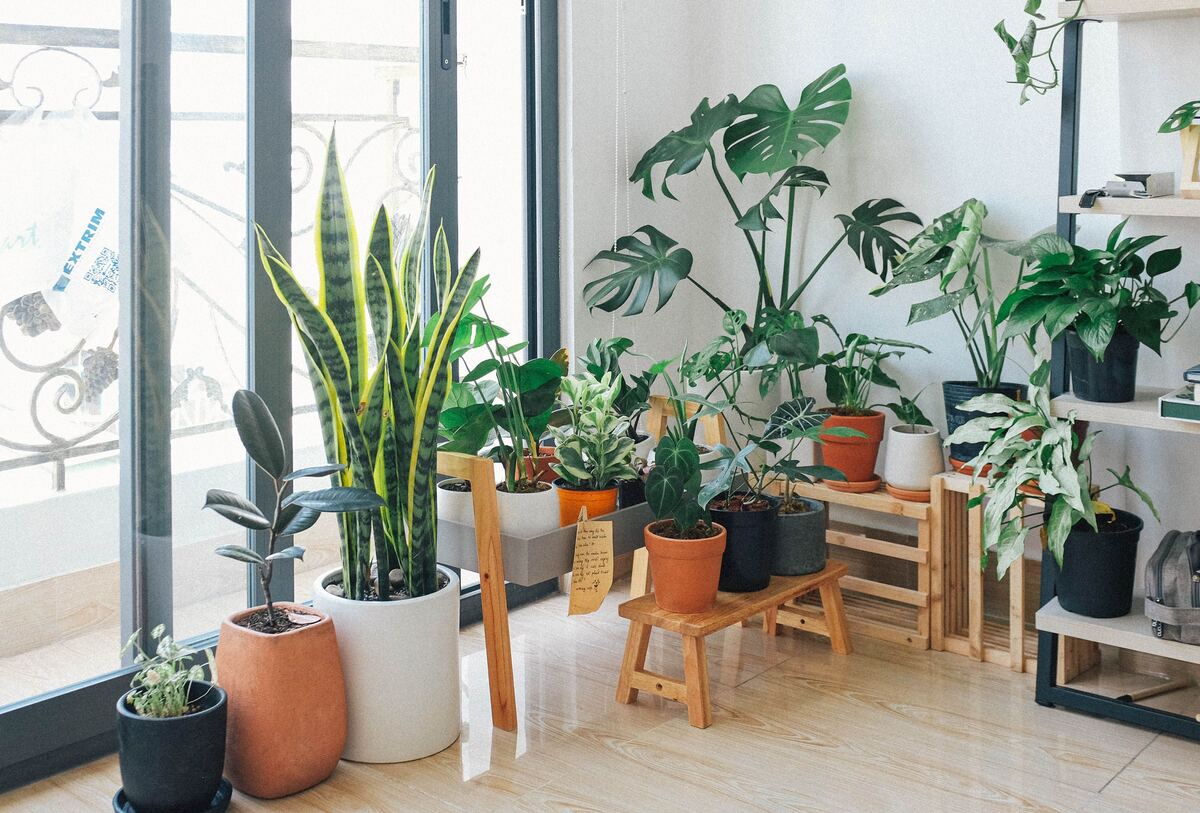
I'd also gently push back on the idea that you need many plants for this to matter. Research on biophilic design in office environments has found that even a single plant within eyeline of a person's desk produces measurable improvements in self-reported wellbeing and stress levels. One plant. That you look at during the day. That you water when it needs it.
One Small Green Thing
I think about how much of our intentional living work focuses on what we add to our routines — the morning ritual, the supplement stack, the journaling practice. All of which I love. But the environment we're doing those things in shapes whether they can actually land. A space that your nervous system reads as depleted, artificial, or inert makes every other practice work harder than it has to.
One plant on a shelf you look at every day. One corner where something is growing, quietly, without being asked. It won't fix everything. But your nervous system might notice it in ways that take a few weeks to fully feel — a small, ambient loosening that you can't quite explain until you realize it started happening right around the time you brought something alive into the room.
That's biophilia. That's a body finding its way back to something it recognizes.