Every so often a wellness idea comes along that’s so charming you almost want it to be true. Seed cycling is one of them. The premise is quietly beautiful: your hormones move in a monthly tide — estrogen rising in the first half of your cycle, progesterone in the second — and you can support each phase by eating the seeds richest in the nutrients that phase leans on. Four seeds. Two halves. One small, repeatable ritual. It has spread through wellness circles for a reason. But charm isn’t evidence, so let me give you both the how and the honest science — the way I’d want a friend to give it to me.
First, the Rhythm It’s Built On
Your menstrual cycle has two acts. In the follicular phase (roughly days 1–14, beginning the first day of your period), estrogen climbs toward ovulation. In the luteal phase (roughly days 15–28, after the egg is released), progesterone takes the lead to prepare the body for a possible pregnancy. Seed cycling maps four seeds onto these two acts — the theory being that each pair supplies exactly what its phase quietly asks for.
The Protocol, Simply
This is the whole thing. It really is this simple.
Follicular phase — flax + pumpkin. One tablespoon each of freshly ground flaxseed and raw pumpkin seeds, every day. Flax is the richest known dietary source of lignans — plant compounds that can gently modulate estrogen — carrying roughly 100 times more than most other foods. Pumpkin seeds bring zinc, a mineral involved in the hormone signaling that drives a healthy ovulation.
Luteal phase — sesame + sunflower. Switch to one tablespoon each of ground sesame seeds and raw sunflower seeds. Sesame offers its own lignans plus more zinc; sunflower seeds are rich in vitamin E and selenium — nutrients associated with progesterone support and with the liver’s job of clearing hormones once they’ve done their work.
One small detail that matters enormously: grind your flax and sesame. Whole, they tend to sail straight through you undigested — taking their lignans with them. A cheap coffee grinder, or pre-ground seeds kept in the fridge, is the difference between a ritual and a garnish.
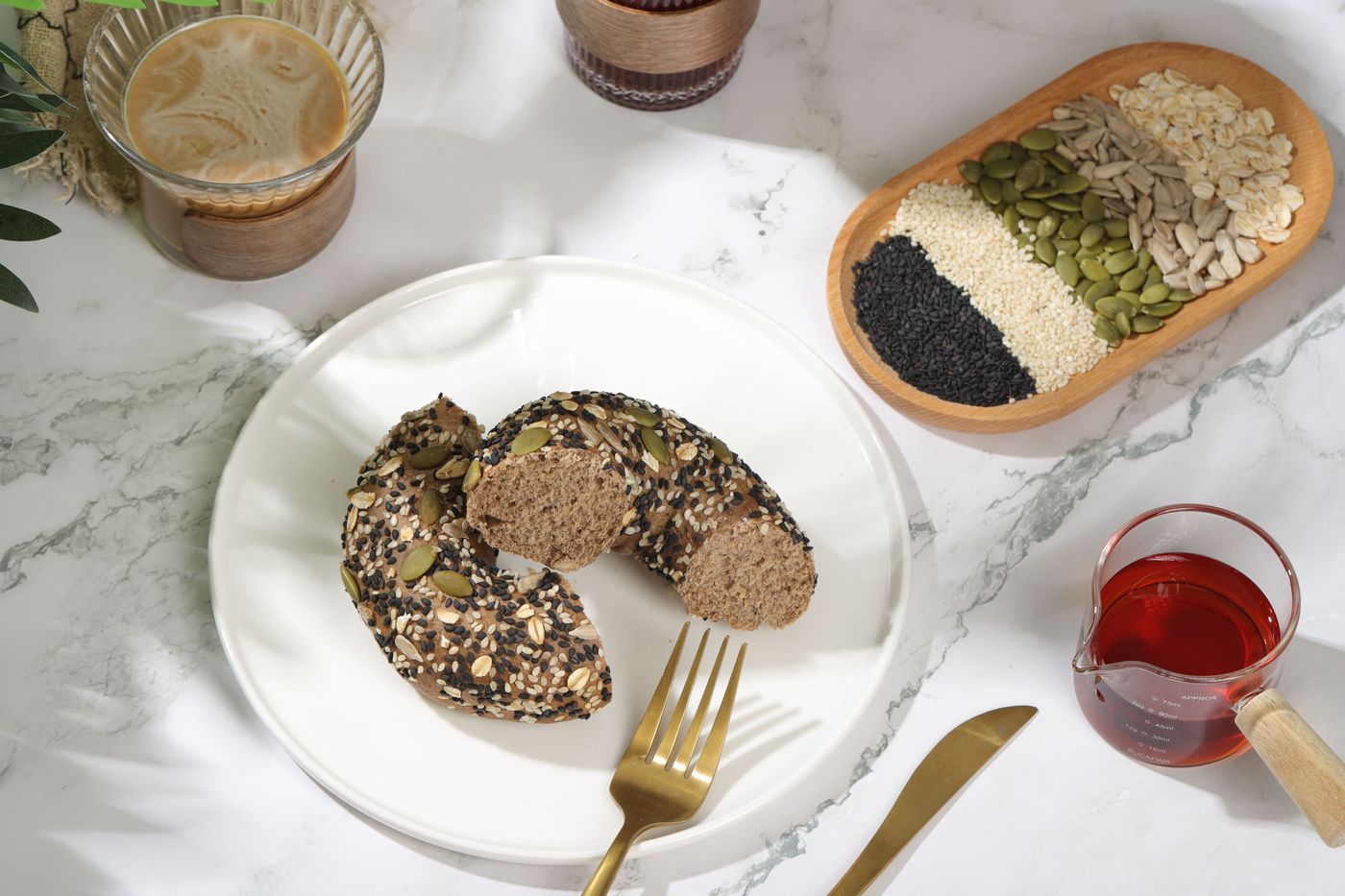
The magic was never in the timing alone. It’s that seed cycling gets you eating, every single day, some of the most nutrient-dense food on earth.
Now, the Honest Part: Does It Work?
Here’s where I’ll be the friend who tells you the truth rather than the one who sells you something. The most encouraging evidence to date is a 2025 systematic review that pooled ten studies and roughly 635 women with PMS or PCOS. It found that seed-based interventions were associated with favorable shifts in sex hormones (measurable changes in FSH and the LH-to-FSH ratio), better metabolic markers like insulin resistance and cholesterol, and genuine symptom relief. That is a real, hopeful signal — not nothing.
But the same reviewers were careful, and so should we be. Most of those studies tested the individual seeds — flax on its own, sesame on its own — rather than the precise phase-timed “cycling” protocol. The trials were small and varied. And an older study found that flax lignans didn’t significantly change estrogen levels in either phase. So the truthful summary is this: the nutrition is genuinely well-founded, and the specific timing is promising but not yet proven.
Why I Still Think It’s Worth It
You might expect that honesty to end with “so don’t bother.” It doesn’t — and here’s the reframe that changes everything. Whether or not the calendar-precise timing is doing something special, seed cycling quietly gets you eating a daily, rotating dose of flax, pumpkin, sesame, and sunflower — foods packed with omega-3s, zinc, magnesium, vitamin E, selenium, fiber, and protein. Those nutrients unambiguously support hormonal and overall health. There is no risk, no cost to speak of, and real nutritional upside.
And there’s something quieter still. A practice that asks you to notice which phase you’re in — to tune, gently, into your own cycle — is its own kind of medicine. In a life that rarely invites us to move with our rhythms, a spoonful of seeds becomes a small daily act of paying attention. If you’d like the fuller picture of eating for your hormones, it sits beautifully alongside the foods that support your hormones and the everyday habits that keep cortisol in check.
How to Actually Start (Without Overthinking It)
If you take one thing from this, let it be permission to start small and stay relaxed.
- Grind a batch. Blitz flax and sesame in a coffee grinder; store in the fridge in a jar so the oils stay fresh.
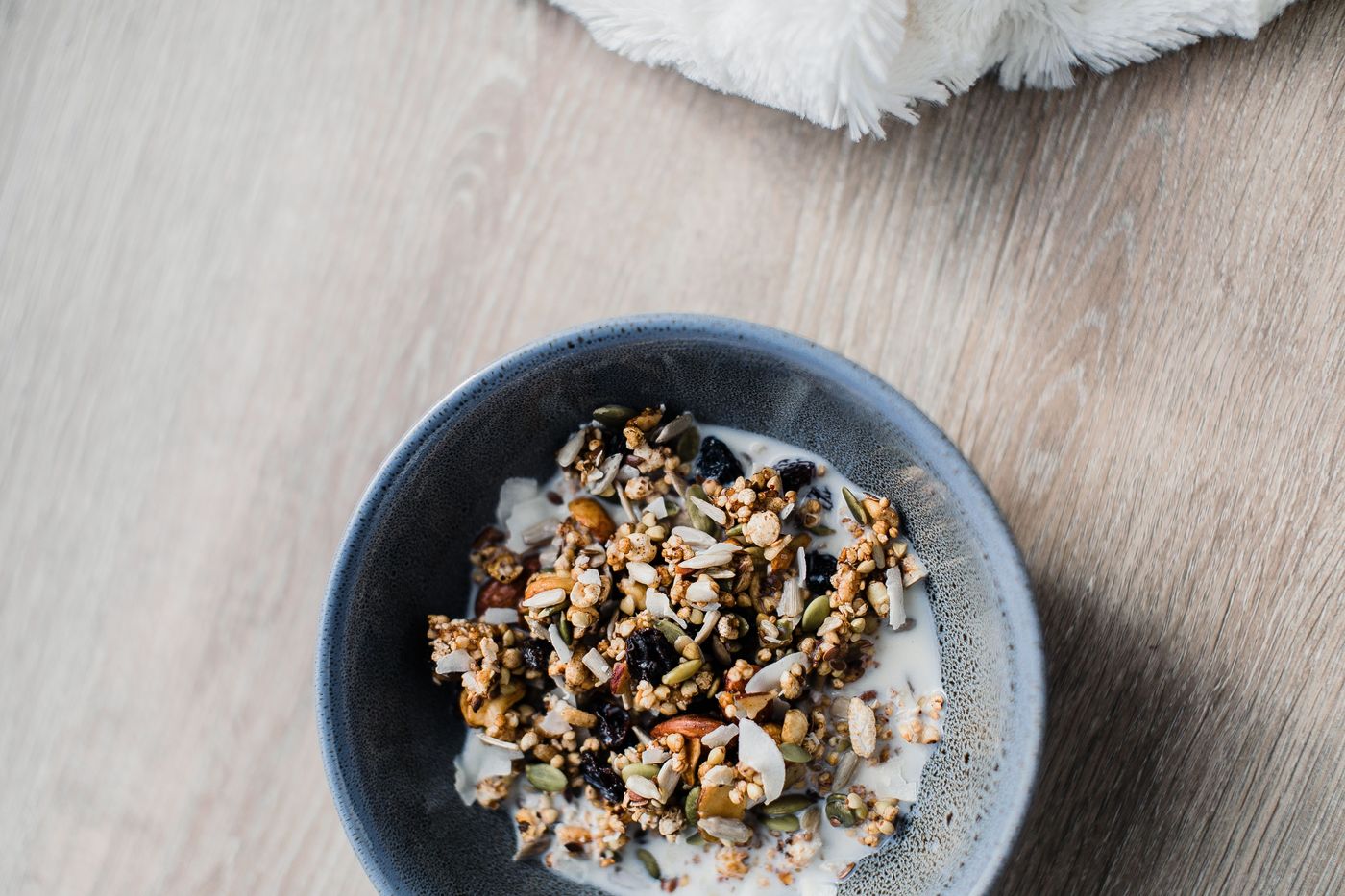
- Make it effortless. Stir the day’s tablespoon into oatmeal, yogurt, a smoothie, or a salad. It should take ten seconds, not willpower.
- Anchor to day one. Follicular seeds start on the first day of your period. No period, or irregular? Use the moon — new moon as “day 1.”
- Give it three cycles. Hormones shift slowly. Judge it after about three months, not three days.
- Keep your expectations kind. Treat it as nourishment you’re almost certainly benefiting from — and a lovely bonus if the timing helps too.
Sometimes the gentlest thing you can do for your body is also the most consistent one.
Seed cycling may or may not be quietly retuning your hormones on a schedule — the science is still catching up to the story. But a daily spoonful of some of the most nourishing food on the planet, eaten with a little attention to your own rhythm? That was always going to be good for you. Start there. Let it be simple. Let it be kind.