A friend came over last month and I did the thing. You know the thing. Forty minutes of moving objects two inches to the left, hiding the drying rack, turning the cushion so the worn corner faced the wall.
She arrived, sat down, and said the room felt lovely.
And I thought — she would have said that anyway. She'd have said it with the drying rack out. She came to see me. I had spent forty minutes preparing my home to be photographed by a person who was not going to photograph it.
That's when I started paying attention to how much of my relationship with my own house is actually a relationship with an imaginary observer.
The Standard You're Failing Isn't Real
Here's what I think happened to all of us, and it happened fairly recently.
Before roughly 2012, you saw perhaps a dozen homes a year that weren't your own. Friends' houses, mostly — with their washing up and their unglamorous sofas and their slightly odd wallpaper choices. Your reference point for "a home" was made of real rooms belonging to real people.
Now you see hundreds a week. Almost none of them are homes. They're sets — lit professionally, styled for a single camera angle, with everything outside the frame removed entirely. Many are staged rentals. Some are rendered.
Research on social comparison has been consistent about what happens next: exposure to idealised images reliably raises dissatisfaction with your own circumstances. We've largely accepted this about bodies. We talk about it far less about rooms — even though the mechanism is identical and the exposure is arguably higher.
So when you look around your living room and feel that small, familiar sag of disappointment, it's worth being precise about what's happening. You aren't comparing your room to other rooms. You're comparing a Tuesday evening to a photoshoot. That's not a competition you were ever going to win, and it's not a standard anyone actually lives in.
There's an Older Idea About This, and It's 500 Years Old
Japan has a word for the thing we've lost, and it's worth understanding properly rather than as an interiors trend.
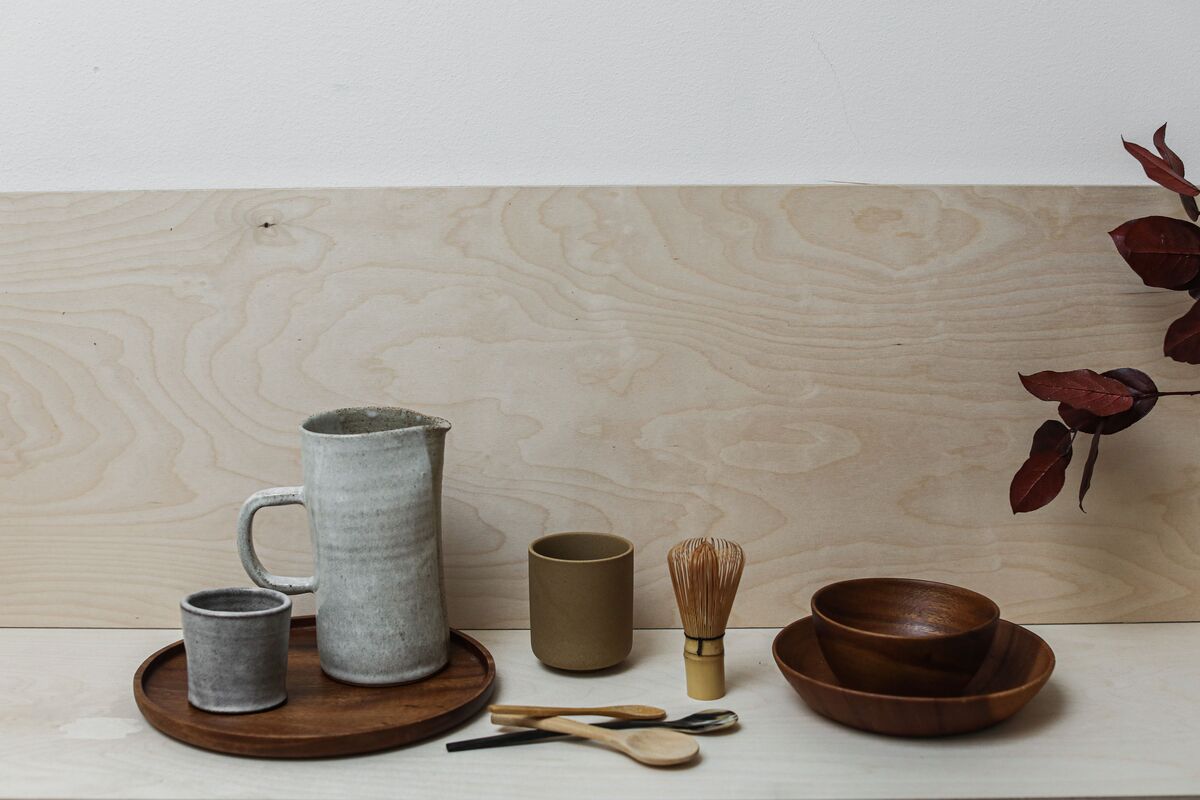
Wabi-sabi is an aesthetic and a worldview built around the beauty of what is imperfect, impermanent, and incomplete. It grew out of Zen Buddhist thought and was shaped particularly by the tea ceremony, where a rough, hand-thrown, slightly lopsided bowl came to be valued above a flawless one.
It's two ideas held together:
Originally described the loneliness of living simply, apart from society. Over time it softened into something warmer: the beauty found in modesty, in rusticity, in a life stripped of excess. Not deprivation — sufficiency.
The beauty that arrives with age and use. The darkening of wood, the softening of linen, the worn place on a stair where feet have landed for forty years. Not damage — evidence.
Held together, they describe a way of seeing in which the mark on the table isn't a flaw in the table. It's the record of a life happening on it.
I want to be careful not to flatten this into decorating advice, because it isn't one. Wabi-sabi is a philosophical position about transience — that everything is passing, nothing is finished, and beauty exists in that condition rather than in spite of it. You cannot buy it. You certainly cannot buy it from a homeware brand using the word on a candle.
But you can borrow the way of looking. And the way of looking changes the room immediately, at no cost, without moving a single object.
A home that looks perfect tells you what someone owns. A home that looks lived in tells you who they are.
Wabi-Sabi Is Not Minimalism
These get conflated constantly, and the difference is the whole point.
Minimalism, as practised in the West, is a pursuit of an ideal. Clean lines, clear surfaces, visual perfection achieved through subtraction. It's beautiful — and it's demanding. A minimalist room goes wrong the instant something is left out of place. It's a standard that must be actively maintained, which means it can generate exactly the anxiety it promised to relieve. I've watched people become more stressed by an empty room than they ever were by a full one.
Wabi-sabi has no ideal to fail at. There's no arrangement to maintain, because irregularity is the point. The chipped bowl is better than the perfect one. The asymmetrical shelf is better than the balanced one. Nothing can be "out of place" in a system that doesn't believe in a correct place.
Minimalism is about control. Wabi-sabi is about acceptance. Both can make a lovely room; only one of them lets you sit down in it.
- Must be maintained — One thing out of place and the whole effect collapses. The room is a performance requiring constant stage management.
- Ages badly — Gloss, chrome and laminate look new, then damaged. There's no lovely middle.
- Resists living — You feel a flicker of anxiety when someone puts a cup down. That's not a home; that's a set.
- Is built for the camera — Optimised for one angle at 11am in good light. Not for a wet Tuesday in February.
- Improves with use — Oiled wood, linen, leather, brass, clay. Every year makes them better rather than worse.
- Absorbs a life — The mark, the mend, the fade. These are the parts you'll miss when you eventually move.
- Allows people in — Nobody hesitates before setting down a glass. That ease is the entire point of a room.
- Is built for evenings — Judged by how it feels at seven with the lamps on, not how it photographs.
Kintsugi: Repair as the Most Beautiful Part
There's one practice inside this tradition I find genuinely moving, and it's the clearest expression of the whole idea.
Kintsugi is the repair of broken pottery using lacquer mixed with powdered gold. The break isn't disguised. It's traced in a bright, deliberate seam — made the most striking thing about the object.
The philosophy underneath is that the repaired piece is more valuable than it was before it broke. Not equally valuable. More. Because it now carries a visible history: something happened to it, someone chose to keep it, and the keeping is part of what it is.
Set that against how we usually handle damage. Something chips and we turn it around so the chip faces the wall. Something breaks and we replace it quietly. We treat the history of an object as a defect to be concealed — which is a strange way to treat the things we've lived alongside for years.
I'm not suggesting you take up lacquerware. But the next time something breaks, there's a real question available: is this beyond use, or am I just embarrassed by the mark? Most of the time it's the second one.
We were taught that damage lowers the value of a thing. Kintsugi proposes the opposite — that an object which has been broken and kept is worth more than one that was never tested. It is very hard to hold this idea about a bowl and not eventually apply it to yourself.
The Distinction That Matters: Imperfection Isn't Clutter
I want to be honest here, because I don't think this idea should be used to excuse a genuinely difficult environment.
Clutter is real and it does have a cost. Research has linked high clutter to elevated cortisol and reduced focus — one well-known study found that women who described their homes as cluttered showed flatter, less healthy daily cortisol profiles. That's not aesthetic snobbery; it's a measurable effect. Living in overwhelm is genuinely hard.
But clutter and imperfection are not the same thing.
Clutter is excess — objects with nowhere to go, surfaces you can't use, decisions you haven't made yet stacked in the hall. It takes something from you daily.
Imperfection is a scratched table. A faded rug. A wall colour you'd choose differently now. A room that looks like a person has been in it. It takes nothing from you at all — unless you've decided it says something about you, which is a separate problem and not one that tidying will fix.
So: clear the clutter, absolutely. It's kind to your nervous system, and I've written about that in how I redesigned my home to support my mental health. But once the excess is gone, the marks that remain are not a further task. That's just your life, visible.
How to Actually Let a Room Be
None of this requires buying anything, which is the part homeware brands would rather you didn't know.
Mostly things to stop doing, rather than start.
- Choose materials that age well. Wood, linen, stone, clay, leather, brass, wool. These get better. Gloss laminate, chrome, and polyester only ever get worse — they look new, then damaged, with nothing in between.
- Stop replacing things at the first mark. The mark is the beginning of the object becoming yours. Give it a few years before deciding.
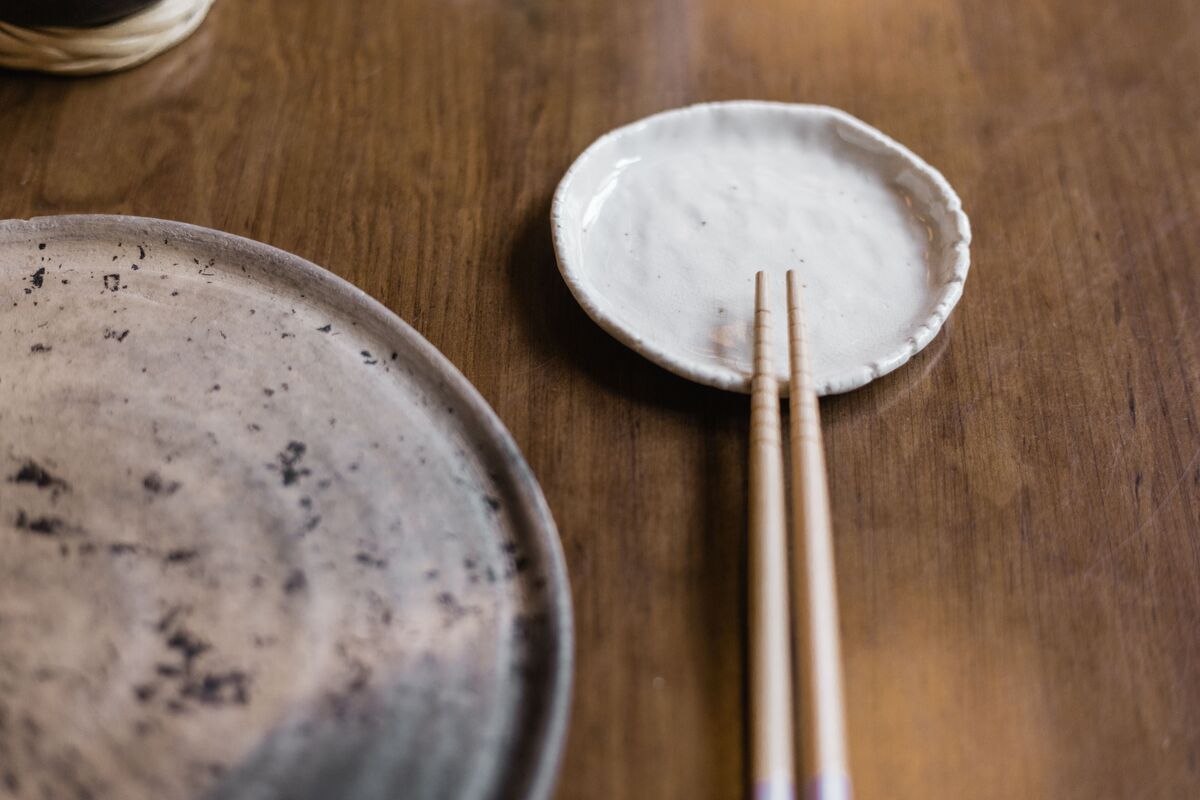
- Buy one thing made by a person. A hand-thrown mug, an uneven bowl, something with the maker's irregularity in it. One is enough to shift how you see the rest of the room.
- Leave a surface empty and don't fill it. Wabi-sabi values ma — meaningful empty space. Resist the reflex to style it. The emptiness is doing something.
- Mend one thing instead of replacing it. Sew the cushion, glue the handle, patch the throw. Visibly, if you can bear it. It changes your relationship to the object more than you'd expect.
- Notice the light instead of the objects. The best thing about most rooms is what the light does in them at six in the evening, and it costs nothing, and no amount of styling improves it.
- Judge the room at seven on a Tuesday. Not at 11am with the sun in. If it feels good on an ordinary evening with the lamps on, it's working. That's the only test that matters.
What This Is Really About
I'll be honest about why I think this idea travels so well, and it isn't interiors.
It's very difficult to spend time with the belief that a bowl is more beautiful for having been broken and repaired, and not eventually notice that you're holding a completely different standard for yourself.
We are, most of us, quietly running a perfection audit on our own lives. The years that didn't go to plan. The version of ourselves we thought we'd be by now. The things that broke and got put back together with the seam still showing. We treat those as evidence of falling short — as the parts to turn toward the wall when someone comes over.
Wabi-sabi makes a different proposal, and it's one worth sitting with. That the marks are not the failure of the thing. They are the thing having existed, having been used, having lasted. That completion was never available to anyone, so it can't reasonably be the standard. And that what's actually beautiful — in a room, in a bowl, in a person — is almost always the evidence of a life having happened there.
The ring on my coffee table is from a mug my friend set down while telling me something that changed how I understood her. I could probably sand it out. I've decided I'd rather have the table with the story in it.
Your home is not a photograph. It was never supposed to be.
It's supposed to be the place you're least observed and most yourself — the one room in your life with no audience. Somewhere along the way we started styling it for people who aren't there, and lost some of the ease that was the entire point of having somewhere to come home to. So let the wood be marked, let the shelf be uneven, let the corner be unfinished. The house isn't waiting to be completed. It's already doing the only job it has, which is holding a life while it happens.