Dogs don't read words. They never have. While we are busy composing our faces into something presentable, choosing careful language, deciding what version of ourselves to offer the room — our dogs have already read the full report. Fear smells sharp. Anxiety smells metallic. Stress smells loud. And sadness, according to people who study these things, smells like rain, but bad.
We cry in the bathroom and think no one knows. But our hormones announced it five minutes ago. Adrenaline, cortisol, the chemical language of a body that is struggling — all of it broadcasting on a frequency our dogs receive clearly. That's why they come. That's why they press their weight against us, or rest their chin on our knee, or simply sit close enough that we can feel them breathing. They are not responding to what we said. They are responding to what we are.
I have been thinking about this a lot lately — about what it means to be someone's whole world. Not in the way we use that phrase between people, where it can mean everything from devotion to dependency. But in the specific, uncomplicated, daily way that it is simply true for a dog. You are their climate. Their anchor. Their reason for orienting toward the door every time something sounds like your car. You are the whole world — not as metaphor, but as the actual, operational fact of their existence.
Can Dogs Sense Your Emotions? What They're Actually Reading
The science of the dog-human bond has become one of the more quietly extraordinary areas of animal behavior research over the past two decades, and what researchers have found consistently is this: dogs are not simply responding to our behavior. They are responding to our biology.
A dog's sense of smell is estimated to be anywhere from 10,000 to 100,000 times more sensitive than a human's. They have up to 300 million olfactory receptors compared to our approximately six million. What this means, practically, is that the chemical changes your body produces in response to emotion — the shift in cortisol, the spike in adrenaline, the hormonal cascade of fear or grief or shame — are as legible to your dog as a headline is to you.
They don't understand the problem. They don't need to. The vibes, to borrow the most accurate available phrase, are off. And a bonded dog's entire job — the thing they have co-evolved with us for tens of thousands of years to do — is to fix the vibes. So they come close. They press against you. They don't ask questions you can't answer. They just stay.
When a dog smells their bonded human, it activates what researchers describe as their reward center, their love center, and their safety center — often simultaneously. You, to your dog, are the signal that food is coming, that danger is managed, that the world is navigable, and that the day is good. You are also the most neurologically significant presence in their environment. Their brain lights up for you the way ours does for our most beloved people — and in some studies, more reliably.
You have a job, friends, a history that predates them, and a future they won't see all of. But to them, you are the whole story. Every chapter. Every day. That asymmetry is the most quietly heartbreaking and beautiful thing about loving a dog.
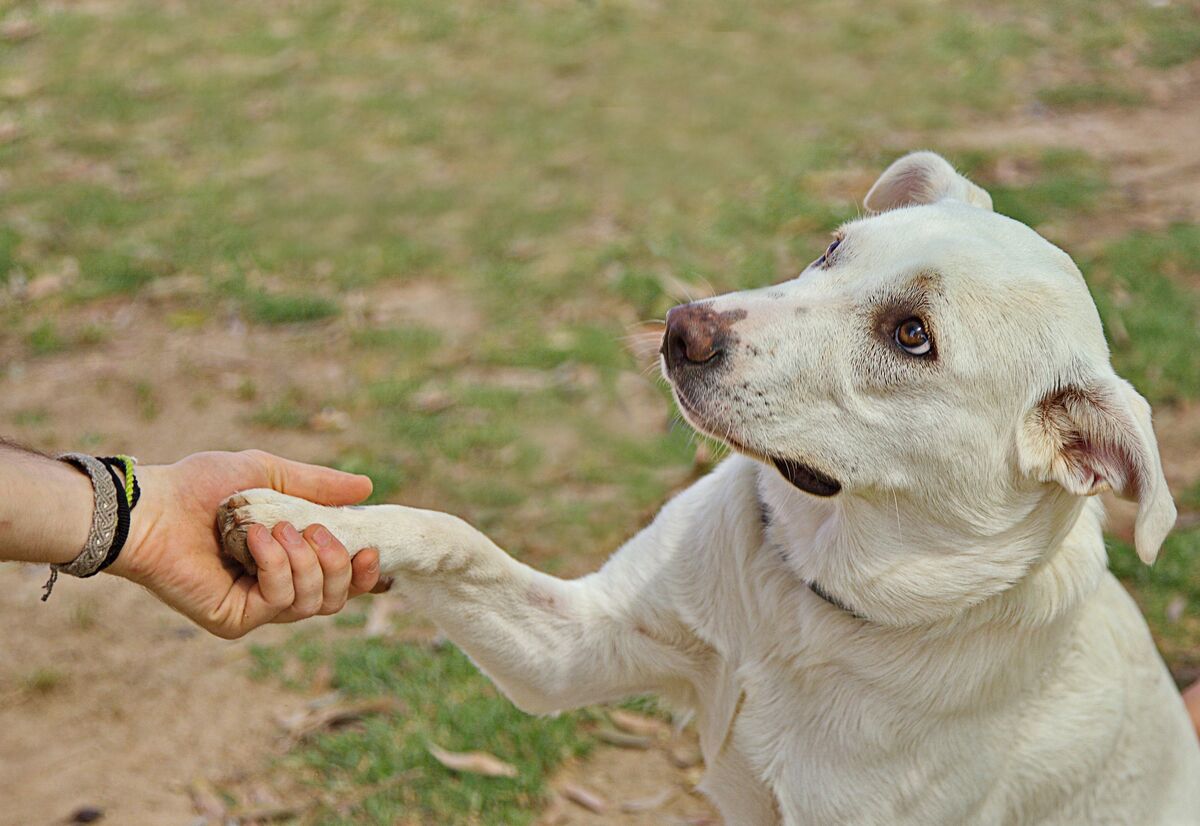
You Are Their Entire Sky
Dogs don't dwell on the past or rehearse the future. Unlike us, they are not carrying yesterday's argument into today's walk, or dreading next week while ostensibly present for Tuesday's dinner. They live fully and only in the current moment — which means every time they see you, it is as complete and total as the first time. Your arrival is never ordinary to them. It is always the highlight.
This creates an asymmetry that is almost too tender to sit with: you are the primary clock of their life. Your routine — when you leave, when you return, when you feed them, when you settle in for the evening — is the architecture of their entire day. Your mood is the weather of the house. When you are calm, they relax. When you are anxious, they go on alert. When you reach for them and speak softly, their stress hormones drop and oxytocin rises — the same bonding chemical that rises in you when someone you love touches you with intention.
The dog-human relationship has been documented for at least 15,000 years, possibly longer. Over that span, dogs have not simply lived alongside us — they have evolved with us, specifically to read us. To track our faces, interpret our body language, respond to our emotional states, and seek connection with us in ways that no other domesticated species does to the same degree. This is not incidental. It is the entire point of what they became.
"The dog-human relationship goes back tens of thousands of years," explains Kate LaSala, a certified dog behavior consultant. "Dogs have evolved quite well to learning to interpret our body language and connect with us on an emotional level so they can thrive." What she means is that we didn't just tame dogs. We shaped each other. And what resulted is a bond that, for the dog, is total.
7 Signs Your Dog Loves You (And What Each One Really Means)
Dogs speak constantly — just not in words. Once you know what to look for, it becomes impossible to miss how clearly and consistently they are telling you exactly where you stand.
A dog choosing to close the distance — leaning against your legs, resting their chin on your lap, sleeping in the doorway of your room rather than the comfortable bed in the hall — is not randomly seeking warmth. They are seeking you. Physical proximity is how dogs signal safety and attachment. When your dog presses against you, they are not asking for anything. They are simply declaring where they belong.
The bathroom shadow is a reliable source of both comedy and genuine feeling. What it represents, beneath the silliness, is that you are their safe base. Separation from you — even briefly, even through a closed door — is a gap in their world that they'd rather not have. Following you is not neediness, in most cases. It is a bonded dog being exactly where they want to be.
Direct eye contact is, for most animals, a confrontational signal. Dogs have learned to override this instinct entirely in the context of their human relationship. Your face is the most information-rich surface in their world: it tells them your mood, your intentions, what's about to happen. Research has shown that sustained mutual gaze between a dog and their bonded human triggers oxytocin release in both parties — the same neurochemical mechanism that underlies the mother-infant bond. They are not staring. They are reading you, with love.
On a walk, they pause and look back to confirm you're still there. During play, they glance up. When they're in another room and things go quiet, they appear in the doorway, assess you briefly, and leave satisfied. This checking-in behavior is the quiet heartbeat of the bond — a continuous low-level verification that you are present, that all is well, that the world is still in order.
Whether you've been away for eight hours or eight minutes, the reunion is whole. The tail, the body, sometimes a toy they felt compelled to bring you as an offering — all of it offered without reservation or memory of the last time you left. No grudges carried. No coolness performed. Just unqualified joy that you are back, which is the only relevant information.
Not just any human's. Not food from anyone's hand, though they'll take it. They want you to look at them, to initiate play, to notice them. Dogs bonded to a specific person seek that person out in a crowd, nudge them when attention has lapsed, and return to them between interactions with others. You are their preferred audience for everything.
They come to you on the hard days. They rest a paw on your knee when you're crying. They position themselves between you and whatever you're staring at when you've gone quiet in the way that means something is wrong. This is not magic — it's chemistry, as we've established. But it lands like magic every time. Because knowing you're not okay and coming anyway, without question, without needing anything explained — that is one of the purest expressions of love available in this world.
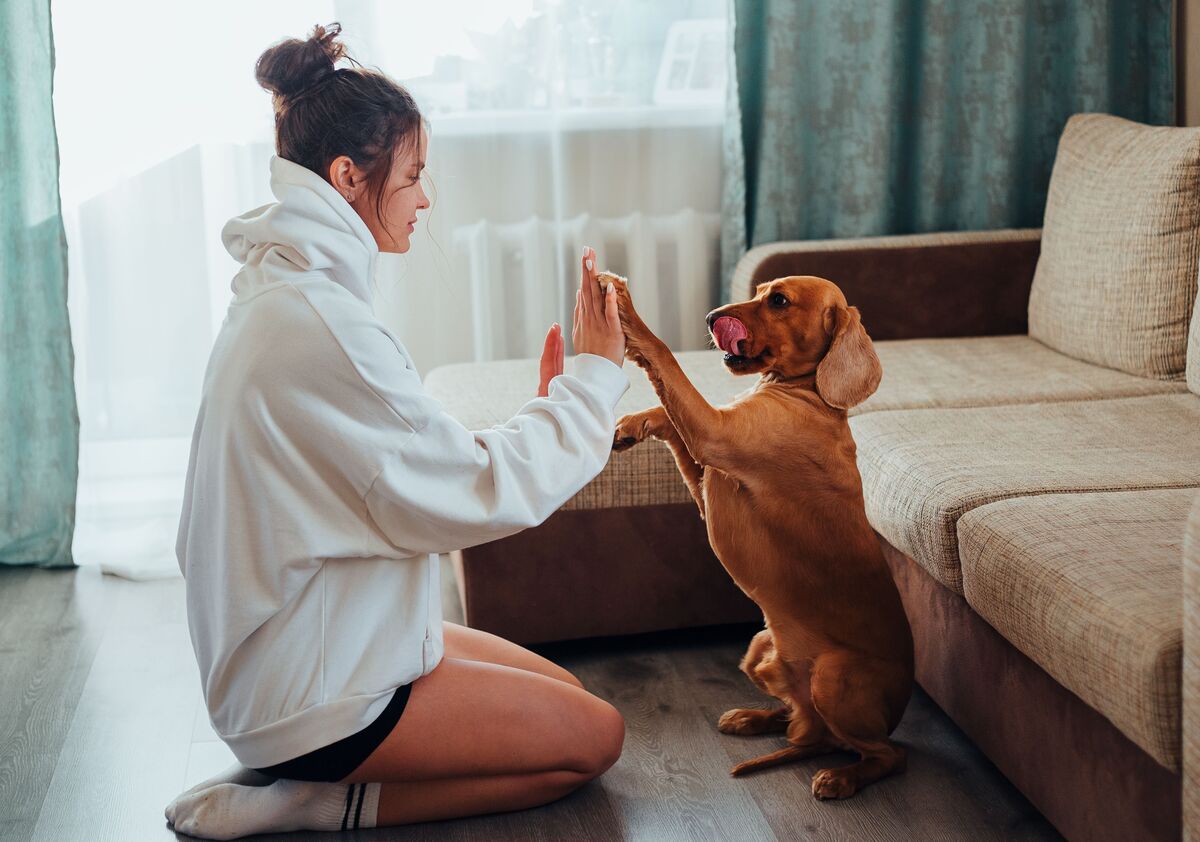
The Bittersweet Part — They Give You Their Whole Life
There is a phrase that circulates quietly among dog people, the kind of thing said softly and understood immediately by anyone who has loved a dog: you may be only a part of their life, but to them, you are their whole world. And then, underneath it, the thing that is harder to say — they will only be a part of your life, but you will be there for their entire life. All of it. Every year they have.
Dogs live roughly 10 to 15 years, depending on size and breed. That is the complete span of their existence — and it is organized almost entirely around you. Your schedule. Your returns. Your voice saying their name. What you are holding when you ask them to sit. The particular way you scratch behind one ear versus the other.
This is what the lifespan contrast actually means, beneath the sentiment: they don't get to opt out of the intensity of their devotion. They don't get to protect themselves by caring a little less, or distributing their attention more broadly, or deciding that this particular relationship isn't worth the risk. They are in. Completely. For whatever time they have.
Which is, perhaps, the thing that makes them so quietly instructive about love. Not because we should love the way dogs love — blindly, without self-protection, with no concern for reciprocity. But because there is something in their total commitment, their absolute lack of ambivalence about who matters most to them, that holds a mirror up to how conditionally and cautiously most of us love by comparison.
What It Asks of You
Being someone's whole world is not a passive designation. It is a daily responsibility — not a heavy one, but a real one. It asks for presence, more than anything. Predictability. The basic dignity of meeting them where they are rather than where you wish they were.
It does not ask for perfection. Dogs are not watching for your best self. They are watching for you — your familiar smell, your particular footstep on the stairs, the way you call their name when you're happy versus when you're tired. They have memorized all of it. They love all of it. Including, remarkably, the parts of you that you are still working on.
The relationship experts who study human attachment note that being someone's "whole world" in the human context can tip into unhealthy dependency. And they're right, for people. But with dogs, the dynamic is different — because the bond is mutual without being equivalent. You are not their therapist or their peer. You are their person. Their safe base. The center around which the rest of their experience orbits. And what that actually requires from you is simpler than it sounds: show up. Be consistent. Touch them with intention. Let their greeting, every single time, actually reach you.
What if the most whole you'll ever feel is being completely, unambiguously loved by someone who has no agenda, no reservations, and nowhere else they'd rather be?
There is a dog somewhere right now listening for your car. Reorganizing their whole body in anticipation of the sound of the door. Not because you did anything to earn it today. Just because you're you — and that has always been enough.